Labels

Sunday, 19 February 2023

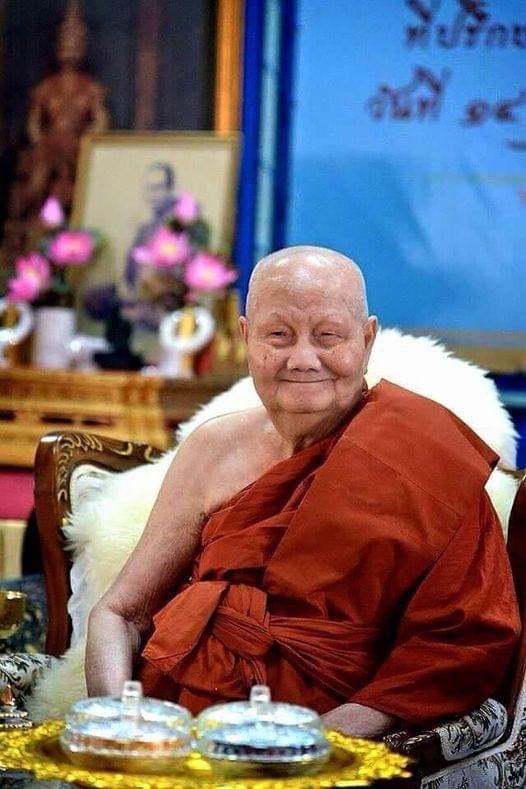
Luang Phor Jaran Thittathammo

Luang Phor Jaran Thittathammo


Devotee: “Luang Phor khrap, why am I so unlucky? I make an honest living, never swindled or cheated anyone. 

But I am being bad-mouthed by others. As for the people who bad-mouth me, they are cheating others and having affairs, and yet they are rich and famous. Whereas I am poor, isn’t this called doing good but getting bad, and doing evil but getting good?”

LP Jaran: “Devotee, you shouldn’t equate goodness to wealth and badness to poverty. Because these are two different things altogether. I can assure you that doing good, you’ll get good, committing sins, you’ll get unwholesomeness. 

People nowadays they value material objects more than spiritual things. So they use material objects and standards to gauge things. Hence they believe good people should become rich and bad people must become poor, isn’t that right?

That’s why society is in turmoil nowadays, because people are holding on to the wrong values. And people who become slaves of money may end up committing unwholesome acts because of wealth. 

But do you believe it, when the Law of Kamma comes into play, even wealth cannot do anything to help you. We may have the opinion that we are able to buy everything with money, even buying off some people, but this is only possible in the human world. 

In the next world, the money you have will be meaningless. People who commit evil must be reborn in the lower realms. Even if you try to take the money to bribe Yommaban (King Yama) to avoid punishment, it’ll be useless as money means nothing to him. 

Therefore devotee, you need not be too upset saying that you have done good but why are you still poor, whereas there are many wicked people around who are wealthy. You do not need to be envious of them. 

Let the kammic law perform its duty, and then you’ll understand that those who do evil, will suffer evil in return.”


Luang Phor Jaran Thittathammo

Wat Amphawan, Singburi Province


Cr. คัดลอกจากหนังสือสัตว์โลกย่อมเป็นไปตามกรรม บทที่ 68 and owner of the photo


11 March 2023

The Noble Eight Fold Path

The  Noble Eightfold Path.


Sending a Precious dhamma greeting to all my dearest dhamma family and friends with lots of love and Metta. 

"One way to avoid causing harm to oneself and others is through the Right Speech, the third component of the  Noble Eightfold Path. The Buddha taught to abstain from false speech, slanderous speech, harsh speech, and idle speech-gossiping. Among them, Gossiping can be defined as casual or unconstrained conversation about others, the details of which are not confirmed as true. In Fact, Gossiping is a low, frivolous and too often a dirty business in which we make enemies for our life. most of the time, people get into troubles or suffer from problems, worries and difficulties because of bad speeches like gossip. That is why Buddha advised that if we want a happy peaceful life, we have to refrain from bad , wrong, negative speeches.  Hence, try to speak only good. When we Discipline our speech, Happiness will follow us and beautiful people will join with us..."

"A lot of problems in the world will be disappeared if we talk to each other instead of talking about each other...."

" In the first Dhamma sermon, The Buddha well proclaimed the path to end of suffering.

1. Right View. The right way to think about life is to see the world through the eyes of the Buddha--with wisdom and compassion.

2. Right Thought. We are what we think. Clear and kind thoughts build good, strong characters.

3. Right Speech. By speaking kind and helpful words, we are respected and trusted by everyone.

4. Right Conduct. No matter what we say, others know us from the way we behave. 

Before we criticize others, we should first see what we do ourselves.

5. Right Livelihood. This means choosing a job that does not hurt others. The Buddha said, "Do not earn your living by harming others. 

Do not seek happiness by making others unhappy."

6. Right Effort. A worthwhile life means doing our best at all times and having good will toward others. This also means not wasting effort on things that harm ourselves and others.

7. Right Mindfulness. This means being aware of our thoughts, words, and deeds.

8. Right Concentration. Focus on one thought or object at a time. By doing this, we can be quiet and attain true peace of mind.

Following the Noble Eightfold Path can be compared to cultivating a garden, but in Buddhism one cultivates one's wisdom. The mind is the ground and thoughts are seeds. 

Deeds are ways one cares for the garden. Our faults are weeds. Pulling them out is like weeding a garden. The harvest is real and lasting happiness...."


🙏🙏🙏

"May the triple Gem Buddha, Dhamma and Sangha bless all of you to have good health peace and happiness by being free from the virus, harm, danger, worries, difficulties, sicknesses, problems, stress, depression and all kinds of bad situations. May you all be protected by the blessings of the Noble Triple Gem....!

May all sentient beings be free from dangers and  suffering and its causes....

May all sentient beings not be separated from sorrowless bliss....

May all sentient beings abide in equanimity free of bias, attachment and anger, and share Loving-kindness and compassion with others....."

May the Noble Triple Gems Buddha, Dhamma and Saṅgha Bless you, all other family members, dhamma friends and every being to have good health, peace, ease, comfort, success and happiness by being free from all sicknesses, problems, worries, difficulties and sufferings....! I'm sharing lot of merits and mettā to all of you. May every heart be filled with joy, compassion, happiness and success. 

May the happiness be set up at every corners of the world.....!


Sadhu sadhu sadhu


Share by Dhammadhasi Bhante


10 March 2023 


Saturday, 18 February 2023

The admonition of Luangpoh Brarajabrahmayan (Ruesilingdum)

The admonition of Luangpoh Brarajabrahmayan (Ruesilingdum)


"Appanasamadhi" means Jhana samapatti. The word "Jhana" in the form of Jhana has 4 levels, i.e. 1st, 2nd, 3rd, and 4th.

The 1st jhana (absorption) will have a happy mind. The mind is very delighted, the mind will be balanced, ears can hear clearly but it’s not annoyed by this sound, this is called that "Pathamajhana (The first absorption)”.

The 1st Jhana has 5 elements such as: Vitakka (thought), Vicara (discursive thinking), Piti (joy), Sukha (happy), Ekaggata (mental one-pointedness).

      Vitakka (thought) means thinking that we will bhavana (mental development). Thinking that we will know to breathe inhale-exhale.

      Vicara (discursive thinking) means knowing that bhavana (mental development) is correct or not, breathing in out is correct or not.

       Piti (joyful) is to be delighted in the mind.

       Sukha (happy) is to be happy.

       Ekaggata (mental one-pointedness) means the mind is emotional balanced as one.

The 2nd jhana will feel that the breath lighter. Breathe is normal but feel lighter. The mind and the senses begin to separate from the first jhana but separated a little bit. When the second jhana separated a little further.

When entering the 2nd jhana (absorption), it will cut off 2 emotions are vitakka (thoughts) and vicara (discursive thinking) but still know breath, will cut off bhavana (mental development) left.

There will have only the rest of three are: piti (joy), sukha (happy), ekaggata (mental one-pointedness).

The 3rd jhana everyone will have the feeling that breathe is less and very soft. The ears can hear the sound of outsiders, not clear. Still know it but the noise becomes a soft sound. 

And to have similar symptoms of being stressed. Who tied up tight, very tight. There is symptoms of being stressed. What kind of body shape it will hold like that without movement. 

The mind will be very happy. This is the symptoms of the 3rd jhana (the 3rd absorption).

The 4th Jhana will cut off happiness. 

There will have the rest of the "Ekaggata" and "Ubekkha" are left. 

The word "Ekaggata" means that the emotion is one. The mind will be balanced only and added equanimity, meaning indifference will have the feeling. I woni't feel my breath going in and out. The mind and the nervous system intersect absolutely, the mind separated from nerve refusing to feel physically, the ears will not hear.

No matter how loud the sound is.

This is the symptoms of the 4th jhana (the 4th absorption).

The admonition of Luangpoh Brarajabrahmayan (Ruesilingdum), Thai Buddhist Arahanta of Wat Tasung.


~ Sunirinth Jiratraipop


9 March 2023


~The Admonition of Luangpuh Paan,Wat Bangnomco~

~The Admonition of Luangpuh Paan,Wat Bangnomco~


Big Abhinna named Abhinnalokiya (Super knowledge) such as:-

1.Iddhividhi : magical powers.

2.Dibbasota : divine ear.

3.Manomayiddhi : the magic power of the mind.

4.Dibbacakkhu : divine eye.

5.Cutupapatayanana : to know dead animals where to be born,to know where it was from.

6.Cetopariyanana : penetration of the minds of others, telepathy.

7.Pubbenivasanussati : remembrance of former existences, retro cognition.

8.Atitamsayanana : to know cause in the past existence.

9.Anagatamsayanana : to know cause in the future.

10.Yathakammamuttayanana : to know the law of karma.

Abhinna means super knowledge or ultra-conscious insight.

Knowledge and Wisdom aren't the same.One has knowledge but might not have a wisdom, so still be sufferings.

Will see that one has a high education, no matter will be a doctor, police, engineers or smart working but still be serious, be ill, be in debt, still be poor, still be disabled, still be broken home.A family isn't harmonious.A mind isn't calm to be unable to sleep,  to get black magic.

As they lack of wisdom.Be full of yourself to be closed an opportunity of relieved sufferings.And unable to use knowledge or cleverness make oneself relieve from suffering.But one who has a wisdom can do it in 11 big Abhinna while one has knowledge or have a high education can't do it.

Someone blamed on them is foolish.Indeed one who is stupid to have no wisdom to do like this.Really, a person who is a Buddhasavaka will be able to do it.As it is not a magic thing.

(Copied from Biography book of Luangpuh Paan, by Luangpoh Phrarajabrahmayan, Wat Tasoong.)


~Sunirinth Jiratraipop~


8 March 2023


The Teaching of Mahasi Sayadaw

The Teaching of Mahasi Sayadaw


You should note each and every thought, whether wholesome or unwholesome. You should note each and every physical movement, whether large or small. You should note each and every feeling that arises in the body or mind, whether pleasant or unpleasant. You should note each and every mental object, whether wholesome or unwholesome. If there is nothing else in particular to note, then note the primary object, the rise and fall of the abdomen when sitting, or the lifting, moving, and dropping of the foot when walking. 

Note these objects uninterruptedly and continuously.

In this way, you should continuously and uninterruptedly note all day and all night, except during the hours of sleep. Before long the meditator will be able to observe all mental and physical phenomena the moment they arise and disappear. Thus you will gradually come to experience insight knowledge of arising and passing away as well as higher stages of insight knowledge.


- Mahasi Sayadaw


7 March 2023


Bhikkhu Nyanasobhano

 Bhikkhu Nyanasobhano


The Buddha said that a follower should examine his teaching in the way that a goldsmith analyzes gold — carefully inspecting, refining and testing it before concluding that it is real. 

So if you have undertaken to practice the dhamma even a little, then please reflect on the result of that practice and see how you feel about it, see whether you feel cheered and inspired to go a little further.

The truths of the dhamma are for us to examine and confirm. We have to remove the obstructions to our understanding by practicing virtue and training ourselves in the art of concentration.

When the conscience is clear and the mind can hold steady on the objects of attention, then wisdom arises of its own nature.


— Bhikkhu Nyanasobhano


6 March 2023


🌹Ajahn Brahm....

🌹Ajahn Brahm....


"A problem with anger is that we enjoy being angry. There is an addictive and powerful pleasure associated with the expression of anger. And we don't want to let go of what we enjoy. 

However, there is also a danger in anger, a consequence that outweighs any pleasure. If we would keep in mind the danger, then we would be willing to let anger go.

"In a palace, in a realm a long time ago, a demon walked in while the king was away. The demon was so ugly, he smelled so bad, and what he said was so disgusting, that the guards and other palace workers froze in horror. This allowed the demon to stride right through the outer rooms, into the royal audience hall, and then sit himself on the king's throne. Seeing the demon on the king's throne, the guards and the others came to their senses.

" 'Get out of here!' they shouted. 'You don't belong there! If you don't move your butt right now, we'll carve it out with our swords!'

"At these few angry words, the demon grew a few inches bigger, his face grew uglier, the smell got worse, and his language became even more obscene.

"Swords were brandished, daggers pulled out, threats made. At every angry word or angry deed, even at every angry thought, that demon grew an inch bigger, more ugly in appearance, more smelly, and more foul in his language.

"This confrontation had been going on for quite a while when the king returned. He saw on his own throne this gigantic demon.

He had never seen anything so repulsively ugly before, not even in the movies.

The stench coming from the demon would even make a maggot sick. And his language was more repugnant than anything you'd hear in the roughest of drunk-filled downtown bars on a Saturday night.

"The king was wise. That's why he was king: he knew what to do. 'Welcome,' he said warmly. 

'Welcome to my palace. Has anyone got you anything to drink yet? or to eat?'

"At those few kind gestures, the demon grew a few inches smaller, less ugly, less smelly, and less offensive.

"The palace personnel caught on very quickly. One asked the demon if he would like a cup of tea. 'We have Darjeeling, English Breakfast, or Earl Grey. Or do you prefer a nice peppermint? 

It's good for your health.' Another phoned out for pizza, monster-size for such a big demon, while others made sandwiches (deviled-ham, of course). One soldier gave the demon a foot massage, while another massaged the scales on his neck. 'Mmmm! That was nice,' thought the demon.

"At every kind word, deed or thought, the demon grew smaller, less ugly, less smelly, and less offensive. 

Before the pizza boy arrived with his delivery, the demon had already shrunk to the size he was when he first sat on the throne. But they never stopped being kind. Soon the demon was so small that he could hardly be seen. Then after one more act of kindness he vanished completely away.

"We call such monsters 'anger-eating demons.'

"Your partner can sometimes be an 'anger-eating demon.' Get angry with them and they get worse — more ugly, more smelly, and more offensive in their speech.

The problem gets an inch bigger every time you are angry with them, even in thought. Perhaps you can see your mistake now and know what to do.

"Pain is another 'anger-eating demon.' When we think with anger, Pain! Get out of here! You don't belong!, pain grows an inch bigger and worse in other ways. It is difficult to be kind to something so ugly and offensive as pain, but there will be times in our life when we have no other option.

"Some cancers are 'anger-eating demons,' ugly and repugnant monsters sitting in our body, our 'throne.' It is natural to say 'Get out of here! You don't belong!' When all else fails, or maybe even earlier, perhaps we can say, 'Welcome.' Some feed on stress — that's why they are 'anger-eating demons.' Those kinds of cancers respond well when the 'King of the Palace' courageously says:

'Cancer, the door of my heart is fully open to you, whatever you do. Come in!' " 


5 March 2023