Labels

Showing posts with label Ajahn Lee. Show all posts

Sunday, 22 October 2023

The Teachings of Venerable Ajahn Lee

The Teachings of Venerable Ajahn Lee

"So whether these categories apply directly to us in the way we practice as monks, or whether they apply only indirectly to us as laypeople— in terms of the things we prepare to give to monks— we have to be clean." (Ajaan Lee)

-:-:-:-

The fourth requisite is gilāna-bhesajja: medicine for curing disease. In the Vinaya, this is divided into four sorts, all of which come under our phrase, “medicine for curing disease.” For the monks, the Vinaya sets rules that don’t apply to laypeople. It divides medicine into four types that are important to know, so I’d like to go into some detail here. 

The things that we eat and swallow come under these four headings: 

1. Yāva-kālika, to be eaten in the right time; 

2. Yāma-kālika, to be eaten that day; 

3. Sattāha-kālika, to be eaten within seven days; and 

4. Yāva-jīvika, to be eaten as long as one’s life.

The food that comes under yāva-kālika: Starting with the eight precepts, you can’t eat that food after noon at all. You can eat it only from the dawn of that day until noon. 

This is the lifespan of food for people who observe these precepts. In simple terms, it covers the food that we (i.e. the monks) eat.

The second type, yāma-kālika, is what you can drink only for the span of that day. This covers juice drinks. 

When fresh juice is made in the morning, you can drink it only until dawn of the next day. You can drink it from this morning through this night. When the sky lightens again, you can’t drink it any more. When a monk has received it to his hand, he can drink it only for this period. 

Once it’s made from the fruit and has come to his hand—even if it hasn’t come to his hand on that day, he can’t eat it the next day, because it tends to spoil. It’ll make him sick. 

This is called yāma-kālika, the juice drinks that are appropriate for contemplatives.

Sattāha-kālika, seven-day medicine: This covers ghee, butter, oil, honey, and sugar. 

Once a monk has received any of these, he has to eat them within seven days. Past seven days, he has to throw them away, or if he doesn’t throw them away, he has to give them to a layperson…

Yāva-jīvika: Medicine that comes under this category, once it’s been handed to a monk, is something he should store well, and he can keep on taking it until it’s gone—no matter how many days it takes. Once there’s no more left, that’s the end of its lifespan. If there’s still some left, you can keep on taking it. For example, things like quinine, aspirin, root medicines that are not mixed with any food.

Foods and medicines, taken together, all fall under these four categories, because they’re all things to be consumed.

So whether these categories apply directly to us in the way we practice as monks, or whether they apply only indirectly to us as laypeople—in terms of the things we prepare to give to monks—we have to be clean. If we’re not clean, it carries a blemish—a blemish for those who prepare it, a blemish for those who consume it. All of this comes under the area of higher conduct.

~~~~~~~

From Starting Out Small: A Collection of Talks for Beginning Meditators, by Ajaan Lee Dhammadharo. Translated by Thanissaro Bhikkhu. 

https://www.dhammatalks.org/ebook_index.html#StartingOutSmall

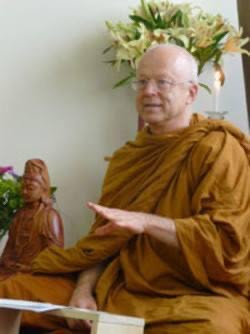
Photo credit: Disciples of Than Phaw Lee Dhammadharo, Wat Asokaram.

Copied 


28 October 2023


Saturday, 14 October 2023

Ajahn Lee Dhammadaro (Wat Asokaram)

Ajahn Lee Dhammadaro  (Wat Asokaram)


When we see good or bad sights with our eyes, we latch onto them. When we hear good or bad sounds with our ears, we latch onto them. When we smell good or bad odors, taste good or bad flavors, feel good or bad sensations, or think good or bad thoughts, we latch onto them—so we end up all encumbered with sights dangling from our eyes, sounds dangling from both of our ears, odors dangling from the tip of our nose, flavors dangling from the tip of our tongue, tactile sensations dangling all over our body, and thoughts dangling from our mind. This way, sights are sure to close off our eyes, sounds close off our ears, odors close off our nostrils, flavors close off our tongue, tactile sensations close off our body, and thoughts close off our mind. When our senses are completely closed off in this way, we’re in the dark—the darkness of unawareness—groping around without finding the right way, unable to go any way at all. Our body is weighed down and our mind is dark. This is called harming yourself, killing yourself, destroying your own chances for progress. 

Thoughts are addictive, and especially when they’re about things that are bad. We remember them long and think of them often. 

This is delusion, one of the camp-followers of unawareness. For this reason, we have to drive this kind of delusion from our hearts by making ourselves mindful and self-aware, fully alert with each in-and-out breath. This is what awareness comes from. When awareness arises, discernment arises as well. 

If awareness doesn’t arise, how will we be able to get rid of craving? When awareness arises, craving for sensuality, craving for possibilities, and craving for impossibilities will all stop, and attachment won’t exist.

Most of us tend to flow along in the direction of what’s bad more than in the direction of what’s good. When people try to convince us to do good, they have to give us lots of reasons, and even then we hardly budge. But if they try to talk us into doing bad, all they have to do is say one or two words and we’re already running with them. This is why the Buddha said, ‘People are foolish. They like to feed on bad preoccupations.’ And that’s not all. We even feed on things that have no truth to them at all. We can’t be bothered with thinking about good things, but we like to keep clambering after bad things, trying to remember them and keep them in mind. 


- Ajahn Lee Dhammadaro  (Wat Asokaram)


Copied 

Photo credit. To the owner who posted it.


13 October 2023


Ajahn Lee Dhammadharo "Loyalty to Your Meditation", transl. Thanissaro

Ajahn Lee Dhammadharo "Loyalty to Your Meditation", transl. Thanissaro 

"If you’re not loyal to your meditation object or to yourself, if you forget the breath you’re meditating on with buddho, buddho, and let your mind go wandering off in thoughts and concepts, it’s as if you’ve abandoned the monk you’re supposed to look after. You don’t follow him; you don’t act the role of his student as you had intended to. The results that you had hoped for will thus get ruined. In other words, your mind won’t get established in concentration. All kinds of hardships — the five hindrances — will come flowing into the heart, and no peace will appear. This causes you to suffer and to miss out on the good results that you should have achieved."


~ Ajaan Lee Dhammadharo "Loyalty to Your Meditation", transl. Thanissaro 

https://www.dhammatalks.org/books/HeightenedMind/Section0016.html


3 October 2023

Sunday, 30 July 2023

The Skill of Release: Teachings of Ajaan Lee Dhammadharo, translated by Ṭhānissaro Bhikkhu.

The Skill of Release: Teachings of Ajaan Lee Dhammadharo, translated by Ṭhānissaro Bhikkhu.


Sitting here and bringing the mind to stillness is not really all that hard to do. The reason it seems hard is because we misunderstand things. Our views are wrong, and so are our presuppositions. If we study so as to understand this point, we’ll know the truth.

For example, when we think that the mind goes here or there, that’s not the truth. It’s just a preconceived notion. Actually, the mind stays with the body at all times. What goes is just the light, as with a flashlight. 

The bulb stays in the flashlight; it’s simply the light that goes flashing out. The bulb and the light are two different things. The bulb has light, but the light outside of the flashlight doesn’t have a bulb. 

The mind—awareness itself—stays with the body with each in-and-out breath. The knowledge that goes flashing out isn’t the real thing. You can’t take the light and put it back in the flashlight, just as when a person tries to catch a light beam it doesn’t stick in his hands.

So if the mind is always in the present, why do we practice concentration? We practice concentration because there are two kinds of fire or electricity in the mind: hot fire, the fires of passion, aversion, & delusion; and cool fire, the fire of jhāna, or mental absorption. 

If we understand how to train the mind, we’ll meet with the cool fire. Hot fire is bad for the nerves of our eyes, ears, nose, tongue, and body. Our sense organs are like light bulbs. The nerves of the senses are like the filaments in the bulbs. If we hook them up to the wrong kind of current, they’ll explode immediately. 

If we hook them up to the right current but never turn them off, they’ll wear out. 

So we practice concentration because we want cool electricity, the cool fire of jhāna. Cool electricity does no damage to our senses and enables us to use our senses to see the truth, to understand everything we see, hear, smell, taste, touch, and think about. This way the mind can be cool and at peace.

This is the skill of insight meditation. When sights strike against the eye, perceptions arise right at the contact, and we can see them with discernment. When sounds strike the ear, when smells strike the nose, when flavors strike the tongue, when tactile sensations strike the body, or ideas strike the mind, discernment gets right there in between them. 

This way sights don’t stick to the eye, and the eye doesn’t stick to sights; sounds don’t stick to the ears, the ears don’t stick to sounds, and so forth. This is intuitive insight, or six-factored equanimity, which can let go both of the senses and of their objects. The true mind stays cool and at peace, like the cool fire that lasts and poses a danger to no one.

When people don’t train their minds, they have to live with hot fire, which wears down different parts of their minds, such as the nerves of their eyes, ears, nose, tongue, and body. When these nerves wear down, they become ignorant. Their eyesight is darkened. When they see sights, they don’t know the truth of those sights. This is called unawareness. Their ears go deaf: When they hear sounds, they don’t know the truth of those sounds. The same holds for their nose, tongue, body, and mind. Whatever they sense, they don’t know the truth of those things. This is called unawareness. It gives rise to craving and defilement, and leads to suffering. This is what it means to be ignorant of the truth.

People ignorant of the truth are like the blind. They have trouble everywhere they walk, thinking that high things are low and low things are high—as when a blind person walks along level ground, lifting his feet up high because he’s afraid he might trip over something. In the same way, people who don’t know the truth think that deep Dhamma is shallow, shallow Dhamma is deep; high Dhamma is low, low Dhamma is high. That’s Wrong View. 

When your views are wrong, your practice is wrong; your release is wrong—like lifting your feet to walk up a set of stairs that doesn’t have any steps. There are people who want to put themselves on a high level but without the proper basis. Their minds don’t have any concentration. They keep walking, thinking, imagining about high-level Dhamma, but they end up back where they started. They’re like a blind person trying to climb a staircase whose bottom step is missing. He’ll just keep stomping on the same spot of ground. In the same way, people on a low level who think they’re on a high level end up sinking further and further into the ground. The more they try to climb up, the deeper they go. Like an elephant fallen into the mud: The more she struggles, the deeper she sinks.

The steps of the stairs are virtue, concentration, and discernment. If we follow the steps, we’ll get to where we want to go—like a person with good eyesight climbing stairs that actually have steps. 

People who practice concentration can know things whether their eyes are opened or closed, because they have brightness within them.


~~~

The Skill of Release: Teachings of Ajaan Lee Dhammadharo, translated by Ṭhānissaro Bhikkhu.

https://www.dhammatalks.org/ebook_index.html#skillofrelease


10 August 2023


Saturday, 8 July 2023

A Collection of Talks for Beginning Meditators, by Ajaan Lee Dhammadharo. Translated by Thanissaro Bhikkhu

A Collection of Talks for Beginning Meditators, by Ajaan Lee Dhammadharo. Translated by Thanissaro Bhikkhu


If a monk doesn’t take proper care of himself when he’s ill, he’s punished in three ways: by the Dhamma, by the devas, and by human beings. When this is the case, regardless of whether he dies or recovers from his disease, it doesn’t serve any purpose.

How does the Dhamma inflict punishment? When illness comes and you understand that the illness is yours or that you’re a sick person, when you can’t separate the body and mind into two separate things because you don’t have enough stillness of mind to withstand the causes of the illness, the punishment is that you suffer from the pain.

To say that devas inflict punishment means this: Whoever practices the duties of a contemplative in good fashion tends to have devas looking after him. But when illness arises and you don’t keep control over your behavior and you show a lot of distress, it causes the devas to be disillusioned and disgusted—the fault being that you don’t maintain the stillness appropriate to your state as a contemplative. The devas are then bound to inflict punishment.

How do human beings inflict punishment? When you make yourself someone hard to care for. You don’t have any endurance; you don’t act in ways appropriate for the fact that you’re sick. You’re hard to please and entangled in sensual desires. You’re a residence for the hindrances—i.e., you let the hindrances overcome the mind. The mind then is bound to lose its power and strength. And this causes the people around you to despise you.

So when you’re sick, you should give rise to heedfulness both by day and by night. This will lead to well-being. Otherwise, your lack of heedfulness will cause the disease to grow stronger.

If you simply understand that “I’m in the hospital to treat my disease,” that’s a misunderstanding. You have to understand that “I’m developing saṁvega and practicing the duties of a contemplative that will lead to release from all suffering and stress.” 

Tell yourself that, instead of treating the disease, you’re treating your heart and mind. After all, you’re not the doctor. You don’t have to get too involved or worried about the affairs of the body. That’s simply a waste of your mind’s strength. 

Your duty as an ill person is to use your mindfulness to look after your mind, that’s all. 

Whether the disease is serious or not, whether you’ll recover or die: That’s not your business. You have to set your mind on thinking like this. That’s what’s right.


~ ~ ~ ~ ~ ~ ~


Starting Out Small: A Collection of Talks for Beginning Meditators, by Ajaan Lee Dhammadharo. Translated by Thanissaro Bhikkhu. 

https://www.dhammatalks.org/ebook_index.html#StartingOutSmall


21 July 2023


Tuesday, 6 June 2023

Teachings of Ajaan Lee Dhammadharo

Teachings of Ajaan Lee Dhammadharo


Keeping awareness with the breath is directed thought (vitakka). 

Knowing the characteristics of the breath is evaluation (vicāra). 

Spreading the breath so that it permeates and fills the entire body is rapture (pīti). 

The sense of serenity and well-being in body and mind is pleasure (sukha). 

When the mind is freed from the Hindrances so that it’s one with the breath, that’s singleness of preoccupation (ekaggatā). 

All of these factors of jhāna turn mindfulness into a factor for Awakening.

~`~`~`~`~`~`~`~`~

There are two kinds of evaluation when we meditate on the breath. The first is to evaluate the in-and-out breath. 

The second is to evaluate the inner breath sensations in the body until you can spread them out through all the properties of the body to the point where you forget all distractions. 

If both the body and mind are full, there’s a sense of rapture and ease that results from our directed thought and evaluation. 

This is Right Action in the mind.

~`~`~`~`~`~`~`~`~

Don’t put pressure on the breath, force it, or hold it. Let the breath flow easily and comfortably, as when you put a fresh egg in cotton batting. If you don’t throw it or push it down, the egg won’t get dented or cracked. 

This way your meditation will progress smoothly.

~`~`~`~`~`~`~`~`~

If the mind isn’t yet still, just watch the in-and-out breath without trying to notice whether it’s comfortable or not. Otherwise, the mind will start to stray. 

It’s like a farmer planting an orchard: If he mows down too much grass all at once, he won’t be able to plant all his trees in time and the grass will start growing again. He has to mow down just the area that he can plant in one day. That’s how he’ll get the results he wants.

~`~`~`~`~`~`~`~`~

One of the benefits from working with the breath is that the properties of the body become friendly and harmonious with one another. We spread the breath all over the body, and then when it grows still it gives you a sense of physical seclusion. 

This is one of the physical benefits. 

As for the mental benefits, mindfulness becomes enlarged. When mindfulness is enlarged, awareness is enlarged. The mind becomes an adult and doesn’t go sneaking off like an ordinary mind. If you want it to think, it thinks. If you want it to stop, it stops. If you want it to go, it goes. 

When the mind is well-trained it gains knowledge, like an educated adult. 

When you converse with it, you understand each other. 

The mind of a person who hasn’t trained it is like a child. This kind of mind doesn’t understand what you say and likes to slip off to roam around—and it goes without saying good-bye. You have no idea what it takes with it when it goes, or what it brings back when it returns.

~ ~ ~ ~ ~ ~ ~

From The Skill of Release: Teachings of Ajaan Lee Dhammadharo, translated by Ṭhānissaro Bhikkhu.

https://www.dhammatalks.org/ebook_index.html#skillofrelease

Ajaan Lee's breath meditation instructions (Method 2): 

https://www.facebook.com/.../a.647987305.../647986991928530/


10 June 2023


Tuesday, 30 May 2023

Heightened Consciousness (Part 1 & 2)

Heightened Consciousness (Part 1)


The Buddha taught, ‘The pursuit of heightened consciousness is the heart of the Buddhas’ teaching.’ Heightened consciousness is a state of mind that lies above and beyond mental defilement. 

There are two ways it can be reached:

(1) The mind doesn’t yet have any heightened inner quality, but we heighten it through our efforts.

(2) The mind has developed the proper inner quality and uses it to keep itself safe, above and beyond defilement.

The first case refers to the state of ordinary people’s minds. When they aren’t sitting in meditation, their minds aren’t in any special state of concentration, so if defilement arises within them, they have to be determined and perceptive—to be aware of the defilement and to make up their minds that they won’t let it push them around. This is called Right Resolve. Even though the mind isn’t in concentration, this technique can give results.

What this means is that we’re alert to what’s going on. For example, when we’re angry, when we meet with something undesirable, we should be alert to the fact and make ourselves determined that no matter what, we’re going to keep the defilement of anger under control by resisting it and putting our better side into play. 

In other words, when we’re angry, we act as if we weren’t. Instead of letting the anger overpower the mind, we use our inner goodness to overpower the mind. This is called heightened consciousness. When you meet with something you don’t like, don’t let the fact that you don’t like it show. Instead, act as if you were happy and calm. 

In other words, put your good side to use. Don’t let your bad side show under any circumstances.

If you’re circumspect and composed enough to hold the mind in check before it can let its defilements come out in word or deed, if you can force the defilements to stop and can let only your best manners show, you count as having heightened consciousness. You are also a good member of any social group, for you can work toward your own progress and that of the group as a whole.

In the texts, this quality is called composure—a state of mind that lies above the defilements. 

This is one form of heightened consciousness and is something we should all try to develop within ourselves as we are able.

~~~~~~~

From Food for Thought: Eighteen Talks on the Training of the Heart, by Phra Ajaan Lee Dhammadharo. Translated by Thanissaro Bhikkhu.

https://www.dhammatalks.org/ebook_index.html#food_for_thought

***********

Heightened Consciousness (Part 2)

The second form of heightened consciousness refers to a mind freed from the Hindrances and trained to a state of Right Concentration. The mind is firmly established in its inner quality. 

When defilements arise, they can’t overpower the mind because they can’t reach in to touch it, for the mind is protected by its own full measure of inner quality.

I ask that we all aim at making this form of heightened consciousness arise within ourselves by being persistent and persevering in cherishing our own inner goodness—in the same way that when we have good food, we make sure to chase away the flies so that we can enjoy it in good health.

To do this, you have to be observant and make two kinds of effort: the effort to abandon your defilements and the effort to develop your meditation theme, which is the means for wiping out the mental Hindrances. 

There are five types of Hindrances: sensual desire, ill will, torpor & lethargy, restlessness & anxiety, and uncertainty. 

As for meditation, there are two ways of practicing it—in series and in isolation—as I’ll explain to you now.

(1) To practice in series is to practice by the book: contemplating the unattractiveness of the body, for instance, by following the lists of its parts without skipping over any of them or mixing them up. 

Whichever theme you choose, you have to understand how the topics are grouped and in what order, so as to deal with them properly.

This kind of meditation can give great benefits, but at the same time can cause great harm. 

For example, if you contemplate the unattractiveness of the body, it can lead to a sense of dispassion, detachment, and calm, but there are times it can also get you into a state where you can’t eat or sleep because everything starts seeming filthy and disgusting. This is one way it can be harmful. 

Or sometimes you may contemplate the body until a mental image arises, but you get frightened and unnerved. In cases like this, you have to try to be up on what’s happening so that your theme will help you instead of harming you.

(2) To practice in isolation is to focus on a single refined theme that doesn’t have a lot of different features. 

In other words, you focus on being mindful of the in-and-out breath, without letting your attention slip away. 

Focus on whatever kind of breathing feels soothing, and the mind will settle down.   

Try to make the breath more and more refined, all the while keeping the mind gently with the breath, in the same way that you’d cup a bit of fluff in the palm of your hand.   

Do this until you feel that there’s no ‘in’ or ‘out’ to the breath at all. The mind doesn’t wander around. It’s quiet and still, able to cut away thoughts of past and future. 

At this point it becomes even more refined, with no restlessness at all. The mind is stable and doesn’t change along with its objects. It’s firmly set and unwavering to the point where it becomes fixed and strong.

When you can develop your meditation to this point, it will make the mind let go of its attachments and gain conviction and understanding into the truths of inconstancy, stress, and not-self. Your doubts will fall away, and you will know the way of the world and the way of Liberation, without having to ask for confirmation from anyone else. 

When your knowledge is clear and free from uncertainty, the mind is firm in its own strength. 

This is when you become your own refuge—when your mind isn’t affected by other people or objects and reaches the happiness and ease of heightened consciousness.

~~~~~~~

Heightened Consciousness in Food for Thought: Eighteen Talks on the Training of the Heart, by Phra Ajaan Lee Dhammadharo. Translated by Thanissaro Bhikkhu.

https://www.dhammatalks.org/ebook_index.html#food_for_thought


1 June 2023


Thursday, 4 May 2023

The Heightened Mind: Dhamma Talks of Ajaan Lee Dhammadharo, translated by Ṭhānissaro Bhikkhu.

The Heightened Mind: 
Dhamma Talks of Ajaan Lee Dhammadharo, translated by Ṭhānissaro Bhikkhu.


When you practice concentration but your mind isn’t firmly established in genuine merit, Māra will come after you with a big grin on his face. 

What this means is the Māras of the aggregates: There will be feelings of pain throughout your body, your perceptions will be a turmoil, your thought-fabrications will think of 108,000 different things, and your consciousness will be aware of things all over the place. 

When this happens, your heart will be crushed and your merit snuffed out. Like a sticky-rice sweet that’s not cooked all the way through: If you eat it, you’ll get indigestion.

When practicing concentration, you have to be careful not to force or squeeze the mind too much, but at the same time you can’t let it run too loose. Force it when you have to; let it go when you have to. 

The important point is to keep directed thought and evaluation in charge at all times. In this way, the mind gains quality: It won’t play truant or go straying off the path of goodness. 

The nature of goodness is that there are bound to be bad things sneaking in, in the same way that when there are rich people there are bound to be thieves lying in wait to rob them. When you make merit, Māra in his different forms is sure to get in the way. So when you meditate, be careful not to fall into wrong mindfulness or wrong concentration.

Wrong mindfulness is when your awareness leaves the four frames of reference—body, feelings, mind, and mental qualities. Here, the body means the breath, feelings are sensations of comfort or discomfort, the mind is the awareness of the body, and the mental quality we want is the quality of the present.

Wrong concentration is when you’re forgetful or unaware, as when you’re unaware of how the body is sitting, where the mind is wandering off to, how it comes back. The mind lacks both mindfulness and alertness.

But when your concentration gets established, the mind will grow higher. And when the mind is up high, nothing can reach up to destroy its goodness. 

Like the stars, the moon, or the sun that shine in the sky: Even though clouds may pass in front of them from time to time, the clouds can’t sneak up or seep up to make the brightness of the stars, moon, or sun grow murky or dark.


* * *

The Heightened Mind: Dhamma Talks of Ajaan Lee Dhammadharo, translated by Ṭhānissaro Bhikkhu.

https://www.dhammatalks.org/ebook_index.html#heightenedMind


16 May 2023


Friday, 28 April 2023

***ON SKILLFUL USE OF TEXTS***

***ON SKILLFUL USE OF TEXTS***


“To hold to the texts isn’t wrong, but they should be held to discerningly, just as in medicine: A doctor who thinks that the only way to cure a fever is to drink a concoction of boiled neem and quinine leaves is wrong. 

Some doctors may add the leaves of other trees and make it into a powder; some may make a concentrated extract; others may vary the dosage.

In the same way, when practicing the Dhamma, to go no further than the texts may in some cases be wrong. Actually, any path that abandons defilement and brings relief from suffering is right. The value of medicine lies in its ability to cure disease; the value of a method of practice lies in its ability to abandon defilement.

As far as I can see, there is nothing wrong with any method that has been found to work. In the end, all such methods must follow the basic principles of virtue, concentration, and discernment, and differ only as to whether they are crude or sophisticated, direct or indirect, fast or slow.”


❀❀❀

Ajaan Lee Dhammadharo

Translated from the Thai by Ṭhānissaro Bhikkhu


Excerpt from Introduction to “Frames of Reference”

~

You can read Ajaan Lee's full introduction here:

https://www.dhammatalks.org/books/FramesOfReference/Section0004.html


28 April 2023


Keeping the Breath in Mind & Lessons in Samadhi, by Ajaan Lee Dhammadharo. Translated by Ṭhānissaro Bhikkhu.

Keeping the Breath in Mind & Lessons in Samadhi, by Ajaan Lee Dhammadharo.
Translated by Ṭhānissaro Bhikkhu.


By and large, we tend to be interested only in discernment and release. At the drop of a hat, we want to start right in with the teachings on inconstancy, stress, and not-self—and when this is the case, we’ll never get anywhere. 

Before the Buddha taught that things are inconstant, he had worked at knowing them until they revealed their constancy. Before teaching that things are stressful, he had turned that stress into pleasure and ease. 

And before teaching that things are not-self, he had turned what is not-self into a self, and so was able to see what is constant and true, lying hidden in what is inconstant, stressful, and not-self. 

He then gathered all of these qualities into one. He gathered all that is inconstant, stressful, and not-self into one and the same thing: fabrications (saṅkhāra) viewed in terms of the world—a single class, equal everywhere throughout the world. 

As for what’s constant, pleasant, and self, this was another class: fabrications viewed in terms of the Dhamma. 

And then he let go of both classes, without getting caught up on ‘constant’ or ‘inconstant,’ ‘stress’ or ‘ease,’ ‘self’ or ‘not-self.’ This is why we can say he attained release, purity, and nibbāna, for he had no need to latch onto fabrications—whether of the world or of the Dhamma—in any way at all.

This was the nature of the Lord Buddha’s practice. But as for our own practice, most of us act as if we have everything figured out beforehand and have succeeded even before we start. 

In other words, we want simply to let go and attain peace and release. But if we haven’t laid the full groundwork, our letting-go is bound to be lacking: Our peace is bound to be piece-meal, our release is bound to be wrong. 

Those of us who sincerely mean well and want only the highest good should ask ourselves: Have we laid the proper foundation? If we don’t lay the proper foundation for release and letting go, how will we ever be free?

The Buddha taught that virtue can overcome common defilements, the gross faults in our words and deeds; that concentration can overcome such intermediate defilements as sensual desires, ill will, torpor, restlessness, and uncertainty; and that discernment can overcome such subtle defilements as craving, clinging, and obscured awareness. 

Yet some people whose discernment is sharp, who can clearly explain subtle points of doctrine, can’t seem to shake off the more common defilements that even virtue can overcome. This shows that something must be lacking in their virtue, concentration, and discernment. 

Their virtues are probably all on the surface, their concentration splotchy and stained, their discernment a smeared-on gloss—like the glass coated with mercury—which is why they can’t attain the goal. 

Their actions fall under the old saying: Keeping a sword outside the scabbard—having a way with words and theories, but no center for the mind; laying an egg outside the nest—looking for goodness only outside, without training the mind to be centered; resting a foundation on the sand—trying to find security in things of no substance. All of this is bound to bring disappointment. Such people have yet to find a worthwhile refuge.

So we should lay the groundwork and put the causes into good working order, because all the attainments we hope for come springing from causes.

attanā codayattānaṁ

paṭimaṅse tamattanā

Rouse yourself. Train your own heart.

Start pondering your own in-and-out breath.


~ ~ ~ ~ ~ ~ ~


Keeping the Breath in Mind & Lessons in Samadhi, by Ajaan Lee Dhammadharo.

Translated by Ṭhānissaro Bhikkhu.

https://www.dhammatalks.org/ebook_index.html#keepingthebreath


20 April 2023


Thursday, 16 March 2023

From 'Concentration Work' in Meditations 6 by Ṭhānissaro Bhikkhu.

From 'Concentration Work' in Meditations 6 by Ṭhānissaro Bhikkhu. 


Ajaan Lee would always recommend starting out with three to seven good, long, deep in-and-out breaths to highlight the process of breathing in the body and to give the body some energy. As the mind settles down, there’s a tendency for the breath to get very subtle and quiet, and sometimes it’s not really enough for the body’s energy needs. 

Ajaan Fuang had a student one time who really liked the quiet breath. She would always go there in her meditation. I remember him criticizing her one night for that. He said, “You really have to read the body to see what it needs right now. If you go just for the quiet breath all the time, it saps your strength.”

An essential skill in meditation is learning how to read what your body needs. Give it more energy when it needs more, even though that may not seem as quiet and refined as you’d like. You’ve got to take care of both the body and the mind. 

Consider the issue of directed thought and evaluation. Ajaan Lee recommended that you go through the body in quite a lot of detail to settle things down and to clear things up to create a good place where you can feel at home. People complain that it’s not quieting to think about the breath and work with the breath energy in different parts of the body. 

Well, it’s part of the work needed in order to get things ready to settle down in a way that will be solid and lasting.

Be willing to do the work that’s needed for a good, solid concentration. Don’t just go hiding out in a little quiet corner. Allowing your awareness to spread and fill the whole body is what gives you the proper foundation for your meditation. 

In doing this work, you exercise your faculties of mindfulness, alertness, and discernment. 

There’s a tendency in some circles to encourage students talented in concentration to direct their energies in the direction of concentration. If they’re more talented in the area of analyzing the mind, they’re encouraged in the direction of discernment. 

Ajaan Fuang, though, would turn tables on people. If they were already talented in concentration, he’d have them work more in learning how to think about and analyze the movements of the mind. If they were already talented in analyzing things, he’d have them learn how to be quiet: just sit with things for a while without predetermining all the time. This way, you learn how to detect when things are out of balance and to bring them back into balance when needed.

There’s work to be done. Ajaan Lee called it your concentration work: the directed thought and the evaluation. 

When you start out with these things, they can be rather coarse; but by exercising them, you learn how to bring them to refinement. 

Sometimes you find that refined breath is too weak. You’re drifting off. 

You’ve got to strengthen things again, to get in touch with the body and to gain a sense of how to listen to it and respond to its needs. This is especially difficult for people who have body issues, who basically want to run away and block out their awareness of the body. 

Learn how to trust the different sensations in the body and trust your ability to handle them. 

In the beginning, you may want to start with just one little, familiar spot in the body or a spot that seems okay, and be willing to hang out there for a while. It may not seem impressive, it may not seem all that quiet yet, but you’re working on potentials here. You’re also working on patience, learning how to allow potentials to develop in a positive direction.

~~~~~~~

From 'Concentration Work' in Meditations 6 by Ṭhānissaro Bhikkhu. 

https://www.dhammatalks.org/books/Meditations6/Section0014.html

16 March 2023


Thursday, 9 February 2023

The teachings of Ajahn Lee.

The teachings of Ajahn Lee.


When trees are withered and dry, it’s because they don’t have any water to nourish them. The same holds true with us. If the mind doesn’t stay inside the body, the body won’t flourish. It’ll have to wither and wear out, grow ill in one way or another, and eventually die because of this disease or that. 

So the mind is like water that permeates the body to give it nourishment. If the mind focuses its attention outside of the body, then the body won’t be able to gain any sense of freshness, fullness, or ease. This is because the mind is the most important factor influencing the body. 

It’s our most valuable resource.

Now, when the mind is a valuable resource in this way, we should learn how to look after it. We have to hand it over to someone we can trust. In other words, we entrust it to somebody venerable. 

But the word venerable here doesn’t mean the external venerables, like monks, because not all monks are trustworthy. Some of them are good monks, some of them aren’t. If we let them cheat us out of our valuables, we end up even worse off than before. 

No, venerable here means internal venerables: the venerable qualities of the Buddha, Dhamma, and Saṅgha within the mind.

When we meditate, we’re handing our minds over to these venerable qualities. They’re qualities that are kind and considerate. They won’t abuse us or cause anyone any harm. This is why we can wholeheartedly entrust our valuables—our mind—to them. 

For example, when we meditate buddho, buddho, we have to be sincere to these qualities. We really have to think about them. We don’t just think about them in jest. 

“Thinking in jest” means that we think without really being intent. We have to be really intent on keeping buddho with the mind, and the mind with buddho each and every time we breathe in and out. This is what it means to be sincere in our thinking. It’s the kind of thinking that serves a purpose.

The purpose here is to develop something of real and abundant essence within ourselves—to create results that will be lasting. Things that don’t serve any real purpose are those giving results that don’t last. 

When we talk about lasting results: for example, when you sit here and meditate, you’ll find that the results will continue appearing even after you die. 

But if you aren’t really meditating, if you let your mind think about other things, you’ll find that the results will vanish at death, because the things you think about aren’t certain or sure. 

They’re not lasting. They’ll have to change, deteriorate, and end up disappearing and dying in the same way that you will.

~~~~~~~

Starting Out Small: A Collection of Talks for Beginning Meditators, by Ajaan Lee Dhammadharo

https://www.dhammatalks.org/ebook_index.html#StartingOutSmall


27 February 2023


Wednesday, 1 February 2023

The Skill of Release: Teachings of Ajaan Lee Dhammadharo

The Skill of Release: Teachings of Ajaan Lee Dhammadharo


The Buddha taught that the five aggregates are a heavy burden, because they all get to the point where we can’t bear carrying them around anymore and have to throw them down in the mud. 

If you don’t keep cleansing them, they keep getting heavier and heavier. If you then try to go depending on other people, you weigh them down, and you yourself are helpless. 

This is because stashing things away in the heart is like taking pictures without ever developing the film. 

What you eat gets put on the film, what you say gets put on the film, what you hear gets put on the film, but that’s as far as it gets: on the film. You’ve never stopped to look at what kind of pictures you have, pretty or ugly. 

If you want to see your pictures, you have to take the film into the darkroom, by closing your eyes and practicing concentration, attaining the first jhāna, directing your thoughts to the present and evaluating it until you can see yourself clearly. 

If you don’t go into the darkroom now, someday the King of Death is going to blindfold you, tie up your feet and hands, and drag you into his darkroom. 

In other words, when you’re on the verge of death you won’t be able to open your mouth or eyes. Nobody will be able to feed you. You’ll want to eat but won’t be able to eat. You’ll want to speak but won’t be able to speak. Your ears will get closed off so that you can’t hear anything clearly. You won’t be able to see your parents, family, children, or grandchildren. You won’t be able to tell them your last wishes. That’s called the darkroom of the King of Death.

~~~~~~~

The Skill of Release: Teachings of Ajaan Lee Dhammadharo, translated by Ṭhānissaro Bhikkhu. https://www.dhammatalks.org/ebook_index.html#skillofrelease


8 February 2023

Saturday, 14 January 2023

The Skill of Release: Teachings of Ajaan Lee Dhammadharo

The Skill of Release: Teachings of Ajaan Lee Dhammadharo


The Buddha taught that the five aggregates are a heavy burden, because they all get to the point where we can’t bear carrying them around anymore and have to throw them down in the mud. 

If you don’t keep cleansing them, they keep getting heavier and heavier. If you then try to go depending on other people, you weigh them down, and you yourself are helpless. 

This is because stashing things away in the heart is like taking pictures without ever developing the film. What you eat gets put on the film, what you say gets put on the film, what you hear gets put on the film, but that’s as far as it gets: on the film. You’ve never stopped to look at what kind of pictures you have, pretty or ugly. 

If you want to see your pictures, you have to take the film into the darkroom, by closing your eyes and practicing concentration, attaining the first jhāna, directing your thoughts to the present and evaluating it until you can see yourself clearly. 

If you don’t go into the darkroom now, someday the King of Death is going to blindfold you, tie up your feet and hands, and drag you into his darkroom. 

In other words, when you’re on the verge of death you won’t be able to open your mouth or eyes. Nobody will be able to feed you. You’ll want to eat but won’t be able to eat. You’ll want to speak but won’t be able to speak. Your ears will get closed off so that you can’t hear anything clearly. You won’t be able to see your parents, family, children, or grandchildren. You won’t be able to tell them your last wishes. That’s called the darkroom of the King of Death.

~~~~~~~


The Skill of Release: Teachings of Ajaan Lee Dhammadharo, translated by Ṭhānissaro Bhikkhu. https://www.dhammatalks.org/ebook_index.html#skillofrelease


8 February 2023 


Sunday, 25 December 2022

The Lessons of Unawareness AJAHN LEE

The Lessons of Unawareness
AJAHN LEE


“We may latch on to the body as being our own, or to the five khandhas—form, feelings, perceptions, mental fabrications, and consciousness—as being our own. Some people identify themselves with greed, anger, or delusion. For example, when greed arises they identify with the greed. When anger arises they identify with the anger. When delusion arises they identify with the delusion. But these things arise only at certain times. Sometimes when lack of anger arises, these people identify themselves with the lack of anger. And when lack of greed or delusion arises, they identify with the lack of greed or delusion—and so these things get all mixed up because of unawareness, or ignorance of the truth.

But once we’ve developed awareness, then when greed arises we won’t identify with it. The same holds true with anger and delusion. This is a step we have to master so that we can catch sight of how these three defilements actually come and go.

In other words, when greed comes we sit and keep watch on the greed until it dies of its own accord. We’ll then be able to know exactly what ugly features it has when it comes and exactly how good it is when it goes. We just sit there and watch it until it disbands and we’ll feel an immediate sense of relief. When anger or delusion comes, we sit and keep watch on the anger or delusion—don’t go running off anywhere else—and we’ll be able to see exactly how bad anger is when it comes, and how good it is when it goes. 

What delusion is like when it comes—no matter which side it’s going to be deluded about—we make a point of keeping our gaze fixed on it. When we can hold ourselves in check this way, that’s awareness.

But if, when greed comes, we get carried along with the greed, or when anger or delusion comes, we get carried along with the anger or delusion, that’s unawareness. If we’re constantly on the look-out for these three defilements, the day is sure to come when they grow ashamed of themselves. We’ll know how they arise, we’ll see how they take a stance, we’ll perceive how they disband. This is the awareness that comes from unawareness.

When we can contemplate things in this way, we’ll be able to gain all eight forms of cognitive skill. If we can hold ourselves in check in the midst of our defilements, without feeling obliged to let them come out in our actions, we’ll give rise to awareness within. This is what is meant by vijjā-caraṇa-sampanno. Our hearts will be pure, free from greed, anger, and delusion. Sugato lokavidū: We’ll fare well whether we come or go, and wherever we stay. This sort of awareness is the real thing. It’s the awareness that will bring us success in the sphere of the Dhamma.”


Source: The Lessons of Unawareness

AJAHN LEE

https://www.dhammatalks.org/books/InnerStrength/Section0009.html

3 January 2023


Wednesday, 14 December 2022

Teachings of Ajaan Lee Dhammadharo, translated by Ṭhānissaro Bhikkhu.

Teachings of Ajaan Lee Dhammadharo, translated by Ṭhānissaro Bhikkhu.


Don’t hang around with the group more than you have to, or you’ll waste your time for meditating. 

The dangers of associating are:

(1) if your behavior isn’t on the same level, it gives rise to irritation. 

(2) If your views aren’t in line with one another, you’re going to argue, which will give rise to defilements. 

It’s just like water where the land is on two different levels. The water on the higher level will flow down to the lower level and make a big roar. If water is flowing along a piece of level ground, the flow of the water hardly makes a sound at all.

Hanging around with the group is like curry ladled onto a plate of rice: It spoils quickly, and you can’t keep it for long. If the rice and the curry are kept in two separate dishes, they don’t spoil as quickly. When people keep to themselves, they rarely have issues.

~~~

From The Skill of Release: Teachings of Ajaan Lee Dhammadharo, translated by Ṭhānissaro Bhikkhu.

https://www.dhammatalks.org/books/SkillOfRelease/Section0001.html


Photo credit: Anumodana to the original sharer


19th December, 2022


Thursday, 8 December 2022

Craft of the Heart, by Ajaan Lee Dhammadharo, translated by Ṭhānissaro Bhikkhu.

Craft of the Heart, by Ajaan Lee Dhammadharo, translated by Ṭhānissaro Bhikkhu.


“What benefits come from practicing concentration?”

A person who practices concentration benefits in the following ways:

a. The heart of a person who practices concentration is radiant, steady, and fearless. Whatever projects such a person may contemplate can succeed because the mind has a solid footing for its thinking. Whatever worldly work such a person may undertake will yield results that are substantial, worthwhile, and long lasting.

b. Whoever has trained the mind to be steady and firm in concentration will be solid from the standpoint both of the world and of the Dhamma.  

A solid heart can be compared to a slab of rock: No matter whether the wind blows, the rain falls or the sun shines, rock doesn’t waver or flinch.    

To put it briefly: the eight chains, i.e., the eight ways of the world (lokadhamma)—gain and loss, status and loss of status, praise and criticism, pleasure and pain—can’t shackle the heart of a person who has concentration.    

The five weevils, i.e., the five hindrances (nīvaraṇa)—sensual desires, ill will, drowsiness, restlessness, and uncertainty—can’t bore into such a person’s heart.

c. A heart made firm in concentration is like a tree with solid heartwood—Indian rosewood or teak—which, once it has died, is of use to people of ingenuity. 

The goodness of people who have trained their hearts in concentration can be of substantial use, even after they’ve died, both to themselves and to those surviving, an example being the Buddha who—even though he has nibbāna-ed—has set an example that people still follow today. 

A person who practices concentration is like someone with a home and family; a person without concentration is like a vagrant with no place to sleep: Even though he may have belongings, he has nowhere to keep them.

A person with a mind made firm in concentration, though, has a place for his belongings. In other words, all major and minor acts of merit and skillfulness come together in a mind that has concentration. 

A person without concentration is like a softwood tree with a hollow trunk: Poisonous animals, like cobras or crocodile birds, will come and make their nests in the hollow, laying their eggs and filling the hollow with their urine and dung. When such a tree dies, there’s no use for it as firewood. 

In the same way, the heart of a person who hasn’t practiced concentration is a nest of defilements—greed, aversion, and delusion—which cause harm and pain for the body. When these people die, they are of no use except as food for worms or fuel for a pyre.

d. A person without concentration is like a boat without a dock or a train without a station: The passengers are put to all sorts of hardships.

~~~~~~~

From Craft of the Heart, by Ajaan Lee Dhammadharo, translated by Ṭhānissaro Bhikkhu.

Read: https://www.dhammatalks.org/books/CraftHeart/Section0001.html

PDF: https://www.dhammatalks.org/Archive/Writings/Ebooks/TheCraftoftheHeart_181215.pdf


17th December, 2022


Wednesday, 16 November 2022

RIGHT EFFORT from Four Treatises on Buddhist Practice, by Phra Ajaan Lee Dhammadharo

RIGHT EFFORT


There are four ways of exerting ourselves in line with the Dhamma –

A. Make a persistent effort to abandon whatever evil there is in your conduct. For example, if you’ve given yourself over to drinking to the point where you’ve become alcoholic, spoiling your work, wasting your money and yourself, creating problems in your family, this is classed as a kind of evil. Or if you’ve given yourself over to gambling to the point where you’ve lost all sense of proportion, blindly gambling your money away, creating trouble for yourself and others, this too is classed as a kind of evil. Or if you’ve let yourself become promiscuous, going from partner to partner beyond the bounds of propriety, this can be damaging to your spouse and children, wasting your money, ruining your reputation, and so is classed as a kind of evil, too. Or if you’ve been associating with the wrong kind of people, troublemakers and debauched types who will pull you down to their level, this will cause you to lose your money, your reputation, and whatever virtue you may have. Thus, each of these activities is classed as an evil – a doorway to ruin and to the lower realms – so you should make a persistent effort to abandon them completely.

B. Make a persistent effort to prevent evil from arising, and use restraint to put a halt to whatever evil may be in the process of arising – as when greedy desires that go against the principles of fairness appear within you. For instance, suppose you have a ten-acre plot of land that you haven’t utilized fully, and yet you go infringing on other people’s property. This is classed as greedy desire, a path to trouble and suffering for yourself and others. Now, this doesn’t mean that you aren’t allowed to eat and live, or that you aren’t allowed to work and search for wealth. Actually, those who have the enterprise to make whatever land or wealth they own bear fruit, or even increasing fruit, were praised by the Buddha as uṭṭhāna-sampadā,enterprising, industrious people who will gain a full measure of welfare in this lifetime. Greedy desires, here, mean any desires that go beyond our proper limits and infringe on other people. This sort of desire is bound to cause harm and so is classed as a kind of evil. When such a desire arises in the heart, you should use restraint to put a halt to it. This is what is meant by preventing evil from arising.

Another example is anger, arising from either good or bad intentions that, when unfulfilled, lead to feelings of irritation and dissatisfaction. Such feelings should be stilled. Don’t let them flare up and spread, for anger is something you don’t like in other people, and they don’t like it in you. Thus it’s classed as a kind of evil. You should exert restraint and keep your mind on a steady and even keel. Your anger won’t then have a chance to grow and will gradually fade away. This is what’s meant by making a persistent effort to keep evil from taking root and sprouting branches.

Or take delusion – knowledge that doesn’t fit the truth. You shouldn’t jump to conclusions. Restrain yourself from making snap judgments so that you can first examine and consider things carefully. 

Sometimes, for instance, you understand right to be wrong, and wrong to be right: This is delusion. When right looks wrong to you, then your thoughts, words, and deeds are bound to be wrong, out of line with the truth, and so can cause you to slip into ways that are evil. When wrong looks right to you, your thoughts, words, and deeds are also bound to be wrong and out of line with the truth. Suppose that a black crow looks white to you; or an albino buffalo, black. When people who see the truth meet up with you, disputes can result. This is thus a form of evil. Or suppose that you have good intentions but act out of delusion. If you happen to do wrong – for example, giving food to monks at times when they aren’t allowed to eat, all because of your own ignorance and delusion – you’ll end up causing harm. So you should be careful to observe events and situations, searching for knowledge so as to keep your thoughts and opinions in line. 

Delusion then won’t have a chance to arise. This is classed as making an effort to exercise restraint so that evil won’t arise.

As for whatever evil you’ve already abandoned, don’t let it return. Cut off the evil behind you and fend off the evil before you. Evil will thus have a chance to fade away.

C. Make a persistent effort to give rise to the good within yourself. For example –

1. Saddhā-sampadā: Be a person of consummate conviction – conviction in the principle of cause and effect; conviction that if we do good we’ll have to meet with good, if we do evil we’ll have to meet with evil. Whether or not other people are aware of our actions, the goodness we do is a form of wealth that will stay with us throughout time.

2. Sīla-sampadā: Be a person of consummate virtue, whose words and deeds are in proper order, whose behavior is in line with the principles of honesty leading to purity. These are truly human values that we should foster within ourselves.

3. Cāga-sampadā: Be magnanimous and generous in making donations and offerings to others, finding reward in the fruits of generosity. For example, we may give material objects to support the comfort and convenience of others in general: The fruits of our generosity are bound to find their way back to us. Or we may be magnanimous in ways that don’t involve material objects. 

For instance, when other people mistreat or insult us through thoughtlessness or carelessness, we forgive them and don’t let our thoughts dwell on their faults and errors. This is called the gift of forgiveness (abhaya-dāna) or the gift of justice (dhamma-dāna). It brings the highest rewards.

4. Paññā-sampadā: Be a person of consummate discernment, whose thinking is circumspect and whose sense of reason is in line with the truth.

All four of these qualities are classed as forms of goodness. If they haven’t yet arisen within you, you should give rise to them. They will reward you with well-being in body and mind.

D. Make a persistent effort to maintain the good in both of its aspects: cause and effect. In other words, keep up whatever good you have been doing; and as for the results – mental comfort, ease, and light-heartedness – maintain that sense of ease so that it can develop and grow, just as a mother hen guards her eggs until they turn into baby chicks with feathers, tails, sharp beaks, and strong wings, able to fend for themselves.

The results of the good we have done, if we care for them well, are bound to develop until they take us to higher levels of attainment. For instance, when our hearts have had their full measure of mundane happiness, so that we develop a sense of enough, we’re bound to search for other forms of happiness in the area of the Dhamma, developing our virtue, concentration, and discernment to full maturity so as to gain release from all suffering and stress, meeting with the peerless ease described in the phrase,

Nibbānaṁ paramaṁ sukhaṁ:

Nibbāna is the ultimate ease, invariable and unchanging.

When we have done good in full measure and have maintained it well until it’s firmly established within us, we should then make the effort to use that good with discretion so as to benefit people in general. In short: Do what’s good, maintain what’s good, and have a sense of how to use what’s good – in keeping with time, place, and situation – so as to give rise to the greatest benefits and happiness. Whoever can do all of this ranks as a person established in Right Effort.


***

From Basic Themes: Four Treatises on Buddhist Practice, by Phra Ajaan Lee Dhammadharo

https://www.dhammatalks.org/books/BasicThemes/Section0000.html


30th November, 2022


Thursday, 27 October 2022

The teachings of Ajahn Lee.

The teachings of Ajahn Lee.


“Our human minds rarely have any time to rest and relax. 

We all have things we keep thinking about. 

You could say that ever since we’ve learned human language, we’ve kept on thinking without any time to stop and rest. 

The mind keeps itself busy until it dies. 

If our bodies were this industrious, we’d all be millionaires. 

But when the mind doesn’t have any time to rest, it’s filled with the hindrances. 

That’s why it knows no peace. 

So we’re taught to practice concentration, letting go of thoughts about sensuality. 

In other words, we close off our sense doors, so that the mind isn’t involved with anything external, and we set our mind still and tall in the qualities of the Buddha, Dhamma, and Saṅgha. 

We don’t let it fall down into any sights, sounds, smells, tastes, or tactile sensations, which are sensual objects.

As for sensual defilements, we don’t let the mind fall into passion, aversion, or delusion. 

Sometimes our concentration practice goes as we want it to, and we get pleased and oblivious. 

Sometimes it doesn’t go as we’d like it to, and we get irritated and annoyed. 

These are cases of passion and aversion. 

As for delusion, sometimes when we sit we lose track of what we’re doing or where we are. 

We get distracted or absentminded and don’t know what’s going on, good or bad, right or wrong. 

This causes the mind to become dark and obscure. 

Sometimes we drift off into thoughts of the past and think about people who have done us wrong, so that we fall into ill will, wanting to get revenge and to settle an old score. 

In this way we harm ourselves by spoiling our practice. 

All three of these defilements—passion, aversion, and delusion—are piles of dried timber just waiting to catch fire, so we have to clear them completely out of the heart.

Mindfulness and alertness are the quality of the Buddha. 

The cool sense of happiness they give is the quality of the Dhamma. 

If you can maintain that coolness until it hardens into a block of ice—in other words, you make that goodness solid and strong in your heart—that’s the quality of the Saṅgha. 

Once you’ve got a solid block of goodness like this, you can pick it up and put it to any use you like. 

Whatever you say will give good results. 

Whatever you do will give good results. 

Your solid block of goodness will turn into a wish-fulfilling gem, bringing all sorts of happiness your way.”


Source: Living in Peace

by AJAHN LEE

https://www.dhammatalks.org/.../Heighten.../Section0013.html


9th November, 2022

Wednesday, 5 October 2022

Food for Thought: Eighteen Talks on the Training of the Heart, by Phra Ajaan Lee Dhammadharo.

Food for Thought: Eighteen Talks on the Training of the Heart, by Phra Ajaan Lee Dhammadharo.


The affairs of the religion are an affair of the heart. Don’t go looking for them in the dirt or the grass, in temples or in monastery buildings. 

Although people may do good with their words and deeds, it’s still an affair of the world. The affairs of the religion are quiet and still, without any fuss or bother. They’re aimed at a mind that’s pure, undefiled, and bright. With goodness, there’s no need to do anything much at all. Simply sit still, and there’s purity.

Take the example of the little novice with quiet and composed manners who, as he was going out for alms one morning, happened to enter the compound of a stingy moneylender and his wife. Whether or not they would put any food in his bowl, he didn’t show the least concern, and he didn’t open his mouth to say a word. 

When he left—his bowl still empty—he went calmly and unhurriedly along his way. 

The moneylender’s wife, seeing him, became curious and trailed him from a distance, until he reached a point where he suddenly had to go to the bathroom. Carefully he put down his bowl and, using his foot, cleared away the leaves to make a little depression in the dirt so that the urine wouldn’t flow off anywhere. 

Then, after looking right, left and all around him to make sure that there wouldn’t be anyone walking past, he squatted down to urinate unobtrusively in the proper way.^1 

When he had finished, he used his foot to cover the spot with dirt and leaves as it had been before, picked up his bowl and went calmly on his way.

As for the moneylender’s wife, who had been watching from a distance, when she saw the manner in which the little novice was acting, the thought occurred to her that he had probably buried something of value. So she stealthily crept to the spot and, using her hand, dug the earth out of the hole buried by the novice and sniffed it to see what it was—and that was when she realized that it was urine. 

The little novice had taken care of his urine as if it were gold. ‘If it were something more valuable than this,’ she thought, ‘there’s no doubt how well he’d care for it. With manners like this, we should adopt him as our foster son. He’d be sure to look after our fortune to make sure that it wouldn’t get wasted away.’She went home to tell her husband who, impressed with her story, had a servant go and invite the novice into their home so that they could inform him of their intentions. 

The novice, however, declined their offer to make him their heir, and taught them the Dhamma, making them see the rewards of practicing generosity, virtue, and meditation. 

The moneylender and his wife were deeply moved, overcame their stinginess, and asked to take refuge in the Buddha, Dhamma, and Sangha from that day onward. 

Eventually, they progressed in virtue, meditation, and right practice to the point where they both gained a glimpse of Liberation. Afterwards, they made a large donation to build a memorial over the spot where the novice had urinated, as a reminder of the goodness that had grown within them from the puddle of urine the little novice had bestowed on them that day.

The affairs of the religion come down to 

‘sacitta-pariyodapanam’

—making the heart entirely clean, clear and pure. 

‘Etam buddhana-sasanam’

—this is the heart of the Buddhas’ teachings.

~~~~~~~

Food for Thought: Eighteen Talks on the Training of the Heart, by Phra Ajaan Lee Dhammadharo.

https://www.dhammatalks.org/ebook_index.html#food_for_thought

^1. "Not being ill, I will not defecate or urinate while standing: a training to be observed." One of the miscellaneous training rules for monks.

Photo credit: 

สดจากเยาวชน : สามเณรนานาชาติ หยั่งรากพระธรรม

https://www.khaosod.co.th/lifestyle/news_1411424

12th October, 2022