Labels

Showing posts with label Dhamma Talk. Show all posts

Tuesday, 17 September 2019

Dhamma Talk by Venerable Chao Khun Keng

Dhamma Talk by Venerable Chao Khun Keng


<<佛法开示錄音 Sharing of Dhamma Talk>>

昭坤庆 Chao Khun Keng 于 2019年9月期間在槟城菩提心园指導禪修的開示的錄音,欢迎下載流传分享。

Sharing of Venerable Chao Khun Keng’s Dhamma talk on 2019 Sept at Penang Bodhi Heart Sanctuary

https://drive.google.com/drive/folders/1ofDvpRBtq4KQNnyhHetj7y7OvXnDqVlo?usp=sharing

You are welcome to share this out


Tuesday, 27 August 2019

Merits - Can they be transferred? By Ven Aggacitta

Merits - Can they be transferred?By Ven Aggacitta


'.. According to the Theravada understanding of the Law of Kamma, we are the makers and heirs of our own kamma. Therefore, there is no question of “sharing/transferring” meritorious kamma to another. The concept of transference of merits contradicts this understanding. ..

'.. Buddha said that all those who either gave dana or offered their services as well as those who were not involved at all but witnessed the offering and then rejoiced in it, share the same amount of merits. It is clear now that while merit cannot actually be shared or transferred (for each of us is the heir of our own karma), it can be gained when a person rejoices in the good that is done. Merit is thus 'shared' in this way...'

'.. After dana, we frequently chant these lines from this verse “Idam vo ñatinam hotu sukhita hontu ñatayo”. We are actually saying “May this be for you all departed relatives, may (you) relatives be well and happy.”

[NB: Sometimes different words are used. Instead of “Idam vo ñatinam”, “Idam no/me ñatinam” are chanted. They can all be used, but they have slightly different meanings:

vo means “you all”
no means “our”
me means “my”.] ..'

'.. Such a disembodied spirit might be restricted in their movements by certain laws that we do not yet understand. So, when we invite them to partake of the food offered, perhaps they rejoice in the good that we do and in this way, they create merits for themselves. As I said in the last part of my book Honouring the Departed, giving dana is a low end type of merit-making. Apparently, the beneficiary of our dana must be aware that we are offering the dana and they must rejoice in order to be able to benefit from it. ..'


Read in full here ..
https://sasanarakkha.org/2007/03/17/can-merits-be-transferred/

https://sasanarakkha.org/2004/07/01/honouring-the-departed/


Dhamma Talk by Bhante Aggacitta on "Forgiveness - Efficacy and Ritual": 
https://soundcloud.com/sasanarakkha/aggacitta-bhikkhu-forgiveness-efficacy-and-ritual


Monday, 13 May 2019

Buddhist Learning - God in Buddhism

☯ Buddhist Learning: Gods in Buddhism Part 2


Do Buddhists Pray?, Vows, Invocations, and Devotional Activities

Dictionaries define prayer as a request for help or expression of gratitude directed to God, saints, or other godlike beings. Prayer is the central devotional activity of many religions. Since Buddhism is nontheistic -- meaning gods aren't necessary -- do Buddhists pray?

And the answer is, no, but yes, and it depends.

Prayer in the dictionary sense is not a formal part of Buddhism, since it is understood there is no powerful "other" to which prayers are directed. But there are a great many prayer-like activities, such as vows and invocations. And Buddhists also request help and express gratitude all the time. So the first question is, where are these expressions directed?
Gods or No Gods?

There are several kinds of beings in Buddhist scriptures and art who are identified as gods. Many, such as the devas, can be thought of as characters in fables. The devas of scripture live in their own realms and generally don't do anything for humans, so there's no point praying to them even if they were "real."

Tantric deities of Vajrayana Buddhism can be understood as archetypes of our own deepest nature, or they may represent some principle, such as the factors of enlightenment. Sometimes prayers are directed to transcendent buddhas and bodhisattvas, who can be understood as archetypes also.

Sometimes laypeople especially do seem to regard iconic figures as separate beings with their own existence, however, even though this understanding is not consistent with other Buddhist teachings.

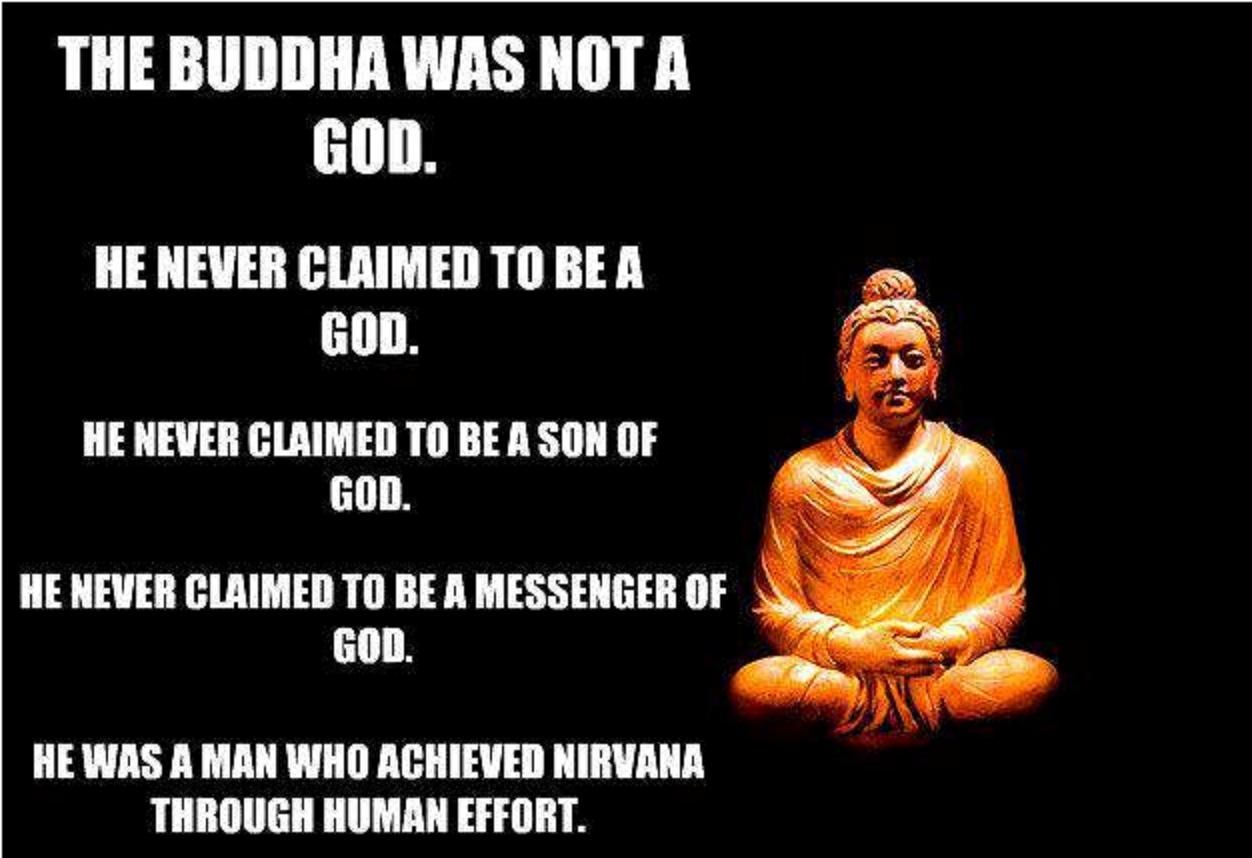
So sometimes people who self-identify as Buddhist do pray, although prayer isn't part of what the historical Buddha's taught.

Buddhist Chanting Liturgy


There are several different types of texts that are chanted as part of Buddhist liturgies, and especially in Mahayana Buddhism the chants often are directed to transcendent buddhas and bodhisattvas. For example, Pure Land Buddhists chant the Nianfo (Chinese) or Nembutsu (Japanese) which invoke the name of  Amitabha Buddha. Faith in Amitabha will bring one to rebirth in a Pure Land, a state or place in which enlightenment is easily realized.

Mantras and dharanis are chants valued for their sounds as much as for what they say. These usually brief texts are chanted repeatedly and could be thought of as a kind of meditation with the voice. Often the chants are directed or dedicated to a transcendent buddha or bodhisattva. For example, the Medicine Buddha mantra or longer dharani may be chanted on behalf of someone who is ill.

This begs an obvious question -- if we invoke the name of a buddha or bodhisattva to aid our spiritual quest or heal our friend's sickness, is this not a prayer? Some schools of Buddhism do refer to devotional chanting as a kind of prayer. But even then, it's understood that the purpose of the prayer is not to petition a being" out there" somewhere but to awaken the spiritual strength that is within each of us.

Beads, Flags, Wheels BIG


Buddhists often make use of prayer beads, called "malas," as well as prayer flags and prayer wheels. Here is a brief explanation of each.

Using beads to count repetitions of a mantra probably originated in Hinduism but quickly spread to Buddhism and eventually to many other religions.

Hanging prayer flags in mountain winds is a common practice in Tibetan Buddhism that may have originated in an earlier Tibetan religion called Bon. The flags, usually covered with auspicious symbols and mantras, are not intended to carry petitions to gods but to spread blessings and good fortune to all beings.

Prayer wheels, also associated primarily with Tibetan Buddhism, come in many shapes and forms. Wheels are usually covered in written mantras. Buddhists spin the wheels as they focus on the mantra and dedicate the merit of the act to all beings. In this way, the wheel turning is also a kind of meditation.

Topic


http://relationalbuddhism.org/site/wp-content/uploads/2013/01/2013-Relational-Buddhism-Karma-Transformation-Non-theism.jpg

https://www.learnreligions.com/do-buddhists-pray-449582

The Role of Gods and Deities in Buddhism


Are there Gods, or aren't there?

It is often asked if there are gods in Buddhism. The short answer is no, but also yes, depending on what you mean by "gods."

It also is often asked if it is all right for a Buddhist to believe in God, meaning the creator God as celebrated in Christianity, Judaism, Islam and other philosophies of monotheism. Again, this depends on what you mean by "God." As most monotheists define God, the answer is probably "no." But there are lots of ways to understand the principle of God.

Buddhism is sometimes called an "atheistic" religion, although some of us prefer "non-theistic"--meaning that believing in a God or gods really isn't the point.

But it's certainly the case that there are all kinds of god-like creatures and beings called devas populating the early scriptures of Buddhism. Vajrayana Buddhism still makes use of tantric deities in its esoteric practices. And there are Buddhists who believe devotion to Amitabha Buddha will bring them to rebirth in the Pure Land.

So, how to explain this apparent contradiction?

What Do We Mean by Gods?

Let's start with polytheistic-type gods. In the world's religions, these have been understood in many ways, Most commonly, they are supernatural beings with some kind of agency---they control the weather, for example,  or they might help you win victories. The classic Roman and Greek gods and goddesses are examples.

Practice in a religion based on polytheism mostly consists of practices to cause these gods to intercede on one's behalf. If you deleted them the various gods, there wouldn't be a religion at all.
In traditional Buddhist folk religion, on the other hand, the devas are usually depicted as characters living in a number of other realms, separate from the human realm. They have their own problems and have no roles to play in the human realm. There is no point praying to them even if you believe in them because they're not going to do anything for you.

Whatever sort of existence they may or may not have really doesn't matter to Buddhist practice. Many of the stories told about the devas have allegorical points, but you can be a devoted Buddhist for your whole life and never give them any thought.

The Tantric Deities


Now, let's move on to the tantric deities. In Buddhism, tantra is the use of rituals, symbolism and yoga practices to evoke experiences that enable the realization of enlightenment. The most common practice of Buddhist tantra is to experience oneself as a deity. In this case, then, the deities are more like archetypal symbols than supernatural creatures.

Here's an important point: Buddhist Vajrayana is based on Mahayana Buddhist teaching. And in Mahayana Buddhism, no phenomena have objective or independent existence. Not gods, not you, not your favorite tree, not your toaster (see "Sunyata, or Emptiness"). Things exist in a kind of relative way, taking identity from their function and position relative to other phenomena. But nothing is really separate or independent from everything else.

With this in mind, one can see that the tantric deities can be understood in many different ways. Certainly, there are people who understand them as something like the classic Greek gods--supernatural beings with a separate existence who might help you if you ask. But this is a somewhat unsophisticated understanding that modern Buddhist scholars and teachers have altered in favor of a symbolic, archetypal definition.

Lama Thubten Yeshe wrote,
"Tantric meditational deities should not be confused with what different mythologies and religions might mean when they speak of gods and goddesses. Here, the deity we choose to identify with represents the essential qualities of the fully awakened experience latent within us. To use the language of psychology, such a deity is an archetype of our own deepest nature, our most profound level of consciousness. In tantra we focus our attention on such an archetypal image and identify with it in order to arouse the deepest, most profound aspects of our being and bring them into our present reality." (Introduction to Tantra: A Vision of Totality [1987], p. 42)

Other Mahayana Godlike Beings


Although they may not practice formal tantra, there are tantric elements running through much of Mahayana Buddhism. Iconic beings such as Avalokiteshvara are evoked to bring compassion to the world, yes, but we are her eyes and hands and feet.

The same is true of Amitabha. Some may understand Amitabha as a deity who will take them to paradise (although not forever). Others may understand the Pure Land to be a state of mind and Amitabha as a projection of one's own devotional practice. But believing in one thing or another really isn't the point.

What About God?


Finally, we get to the Big G. What did the Buddha say about him? Well, nothing that I know of. It's possible the Buddha was never exposed to monotheism as we know it. The concept of God as the one and only supreme being, and not just one god among many, was just coming into acceptance among Jewish scholars about the time the Buddha was born. This God concept may not have ever reached him.

However, that doesn't necessarily mean that the God of monotheism, as commonly understood, can be dropped seamlessly into Buddhism. Frankly, in Buddhism, God has nothing to do.
The creation of phenomena is taken care of by a kind of natural law called Dependent Origination. The consequences of our actions are accounted for by karma, which in Buddhism is also a kind of natural law that doesn't require a supernatural cosmic judge.

And if there is a God, he is us, too. His existence would be as dependent and conditioned as ours.

Sometimes Buddhist teachers use the word "God," but their meaning is not something that most monotheists would recognize. They may be referring to the dharmakaya, for example, which the late Chogyam Trungpa described as "the basis of the original unbornness." The word "God" in this context has more in common with the Taoist idea of "the Tao" than with the familiar Judaic/Christian idea of God.

So, you see, the question as to whether there are or are not gods in Buddhism can't really be answered with a yes or no. Again, though, merely believing in Buddhist deities is pointless. How do you understand them? That's what matters.

https://www.learnreligions.com/gods-in-buddhism-449762


The Role of Chanting in Buddhism

When you go to a Buddhist temple, you may encounter people chanting. All schools of Buddhism have some chanted liturgy, although the content of the chants varies widely. The practice may make newcomers uncomfortable. We may come from a religious tradition in which a standard text is recited or sung during a worship service, but we don't often chant. Further, in the West many of us have come to think of liturgy as a pointless vestige of an earlier, more superstitious, time.

If you observe a Buddhist chanting service, you may see people bow or play gongs and drums. Priests may make offerings of incense, food, and flowers to a figure on an altar. The chanting may be in a foreign language, even when everyone attending speaks English. That can seem very strange if you are under the understanding that Buddhism is a nontheistic religious practice. A chanting service can appear to be just as theistic as a Catholic mass unless you understand the practice.

Chanting and Enlightenment


However, once you understand what's going on, you come to see that Buddhist liturgies are not intended to worship a god but to help us realize enlightenment. In Buddhism, enlightenment (bodhi) is defined as awakening from one's delusions—especially the delusions of the ego and a separate self.

This awakening is not intellectual, but rather a change in how we experience and perceive.

Chanting is a method of cultivating mindfulness, a tool for helping you wake up.


Types of Buddhist Chants


There are several different types of texts that are chanted as part of Buddhist liturgies. Here are a few:

⚫ The chant may be all or part of a sutra (also called a sutta). A sutra is a sermon of the Buddha or one of the Buddha's disciples. However, a large body of sutras of Mahayana Buddhism were composed after the Buddha's lifetime. (See also "Buddhist Scriptures: An Overview" for more explanation.)

⚫ The chant can be a mantra—a short sequence of words or syllables, often chanted repetitively, thought to have transformative power. An example of a mantra is om mani padme hum, which is associated with Tibetan Buddhism. Chanting a mantra mindfully can be a form of meditation.

⚫ A dharani is something like a mantra, although usually longer. Dharanis are said to contain the essence of a teaching, and repetitive chanting of a dharani may evoke some beneficial power, such as protection or healing. Chanting a dharani also subtly affects the mind of the chanter. Dharanis usually are chanted in Sanskrit (or some approximation of what Sanskrit sounds like). Sometimes the syllables have no definite meaning; it's the sound that matters.

⚫ A gatha is a short verse to be chanted, sung, or recited. In the West, gathas often have been translated into the language of the chanters. Unlike mantras and dharanis, what gathas say is more important than what they sound like.

Some chants are exclusive to particular schools of Buddhism. The Nianfo (Chinese) or Nembutsu (Japanese) is the practice of chanting the name of Amitabha Buddha, a practice found only in the several Pure Land forms of Buddhism. Nichiren Buddhism is associated with the Daimoku, Nam Myoho Renge Kyo, which is an expression of faith in the Lotus Sutra. Nichiren Buddhists also chant Gongyo, consisting of passages from the Lotus Sutra, as part of their daily formal liturgy.


How to Chant


If you are new to Buddhism, the best advice is to listen carefully to what everyone around you is doing and do that. Pitch your voice to be in unison with most of the other chanters (no group is every completely in unison), copy the volume of the people around you and start chanting.

Chanting as part of a group service is something you are all doing together, so don't just listen to yourself chant. Listen to everyone at once. Be part of one big voice.

You will likely be given the written-out text of the chanting liturgy, with foreign words in English transliteration. (If not, then listen until you catch on.) Treat your chanting book respectfully. Be mindful of how other people are holding their chanting books, and try to copy them.
Translation or Original Language?

As Buddhism moves West, some of the traditional liturgies are being chanted in English or other European languages. But you may find a substantial amount of liturgy is still chanted in an Asian language, even by non-ethnic Asian westerners who don't speak the Asian language. Why is that?
For mantras and dharanis, the sound of the chant is as important, sometimes more important, than the meanings. In some traditions, the sounds are said to be manifestations of the true nature of reality. When chanted with great focus and mindfulness, mantras and dharanis can become a powerful group meditation.

Sutras are another matter, and sometimes the question of whether to chant a translation or not causes some contention. Chanting a sutra in our own language helps us internalize its teaching in a way mere reading cannot. But some groups prefer to use Asian languages, partly for the effect of the sound and partly to maintain a bond with dharma brothers and sisters around the world.

If chanting at first seems meaningless to you, keep an open mind toward doors that may open. Many senior students and teachers say that the thing they found most tedious and foolish when they first began to practice was the very thing that triggered their first awakening experience.

https://www.learnreligions.com/chanting-basic-buddhist-practice-449748


Becoming a Buddhist


Interested in becoming a Buddhist? There's no substitute for participating in a vibrant Buddhist community, but reading about the associated beliefs, texts, meditation, chanting, ritual, and other practices is a good place to start learning.


https://www.learnreligions.com/buddhism-origins-and-development-4684850


Wednesday, 1 May 2019

The Happiness of a Beautiful Mind 喜滿禪心- 幸福來自美麗的心 燃燈禪師 (Sayalay Dīpaṅkara)

The Happiness of a Beautiful Mind喜滿禪心- 幸福來自美麗的心燃燈禪師(Sayalay Dīpaṅkara)


Here, Sayalay emphasized the importance of the practice of loving-kindness, both to oneself and others, as a crucial support for the practice of sīla, samādhi and paññā. She gave examples of how loving- kindness supports oneself to practise peacefully in a meditation retreat, and how it can be used as a basis for samatha and vipassanā. She also explained the importance of balancing loving-kindness with equanimity, especially in our daily lives.

Loving-kindness

Today I would like to explain what is mettā or loving-kindness. Many have heard this talk before but we have new meditators today. It is also good to practise again and again.
Loving-kindness meditation is very important. The Buddha taught many different kinds of meditation objects for concentration.

sīla, samādhi and paññā

In the Buddhasāsana the practice of sīla, samādhi and paññā are very important. bhikkhu, bhikkhuṇī and sayalay continue to this day and they have their own precepts to keep by the teachings of The Buddha.

Keeping precepts is also very important for lay people. We keep eight precepts here. Keeping the eight precepts is very important. However, if you have any physical or medical problem you can take the five precepts instead of the eight precepts. At the least, as meditators we need to keep five precepts.

Knowing the meaning of the precepts is very important. The first precept which we must try to keep, is to abstain from killing, even insects and all living beings.

The second precept is to abstain from stealing. The third precept is to abstain from sexual misconduct and the fourth precept is to abstain from telling lies. The fifth precept is to abstain from drinking alcohol which is an intoxicant.

In this meditation retreat smoking is also disallowed. These five precepts are very important.

The sixth precept is to abstain from solid food, fruits included, after the noon hour. We can drink fruit juice or certain kinds of herbal drinks, milk is not used in the making of drinks like milo or coffee These are made daily and in accordance with the method as laid down by The Buddha. Dinner is also not served. Sorry about that but I want you to keep this precept. If you are ill or unwell you may drink milk or take food as medicine.

The seventh precept is to abstain from listening to music and singing. Do not follow the loud music coming in from the village. And if you are unable to concentrate do not start to sing in your head, because it is not good for your precepts. We also need to abstain from adorning the body.

The eighth precept is to abstain from sleeping on high and luxurious beds. Beds for sleeping should not be more than twenty-seven inches high; in The Buddha’s time a cotton mattress is considered too comfortable and too soft. Here at the vihāra we use a simple mattress.

The practice of mettā or loving-kindness is the ninth precept.

Everyday when you practise loving-kindness meditation, when you send mettā to yourself or to all beings you are practising the ninth precept.

mettā before samatha and vipassanā

The Buddha taught loving-kindness meditation for the practice of concentration and also for the practice of vipassanā, all these practices are in the framework of sīla, samādhi and paññā.
It is not easy to keep the five precepts without mettā and compassion to all beings. Without mettā to yourself, it is also very difficult to keep the precepts.

When you are kind to yourself and know how to take care and love yourself, you will also take care of your kamma.

If you love yourself, then you want to practise, you want to train your mind to be good. It is simple, very simple yet complicated. As it is important to practise sīla, mettā is also very important.

You may already know that there are forty meditation objects in the practice for concentration or samādhi.

The practice of the four brahma vihāra refers to the practice of mettā, karuṇā, muditā and upekkhā, i.e. loving-kindness, compassion, appreciative joy and equanimity.

In the practice of loving-kindness, The Buddha taught us, as a first step to send mettā to the four types of persons. The first type of person we send mettā to is ourselves. We need to practise until peaceful feeling arises, until we get mettā feeling in our heart, from our mind, from our intention.

This is very important. This is the reason why we need to take care of ourselves.

The second type of person we send mettā to at the beginning, is to someone of the same gender whom we respect. We think of the person- and then send mettā to the person. This second type of person can also refer to a few persons or a group of people we really respect.

The third type of person is the neutral person. These are persons that are neither our friends nor our enemies. The fourth type of person is the enemy. Or we may call them unfriendly persons.

So, beginning the practice with ourselves, we send mettā to ourselves as a protection. It is very important, as we need to have a peaceful mind and a healthy body.

How then do we give ourselves this peaceful mind, free from mental suffering, free from danger?

We need to understand the meaning of the words and the intention, not just ‘going through the ritual’ of chanting, “May I be free from danger...may I be free from danger...” Repeating the words alone will not give you the feeling of peace, the freedom from mental suffering or from danger. You need a contemplative mind, to be able to feel the peace and freedom from mental suffering.


Happy or Unhappy

From the time we are delivered from our mother’s womb, life is either happy or unhappy. We call the unhappy time ‘suffering’, do we call the happy time ‘suffering’? Do we think we are suffering when we are happy? Do we think this way? When life is good and comfortable, we forget about suffering.
But The Buddha taught otherwise. Rebirth means either human birth, or existence in some other realm. With life comes rebirth, ageing and death. This we call life. We go from one lifetime to another.

Rebirth, ageing and death- all are suffering. Being happy or not happy is later. Suffering is when you have body and mind.

Sometimes you feel happy, other times unhappy. When you are unhappy, you contemplate there is so much pain in your body and mind. When you feel life is suffering, you want to be free from suffering. When times are good, you are happy, you will forget about yourself and about your life, and think that ‘everything is ok’
.
That is why The Buddha taught that even when there is happiness, you need to practise vipassanā. You need to contemplate that happiness is also impermanent, that it cannot last.

Happiness after a while will also disappear. Happiness forever is very difficult to find. So, whether happy or unhappy, but mostly during time of suffering, we want to be free from suffering.

We do not want a difficult suffering body or a suffering mind. We want to be free from mental and physical suffering. We want to be happy, to have a good life, to be free from danger. This is the reason we need to take care of our mind. With understanding and intention, we want to protect ourselves.

The intention to take care, to want to be free from danger, we call that the sending of mettā. The intention to send mettā, it is done not only when you are sitting, not only during meditation, and not only in the hall. Where else do you go to practise? The answer is everywhere. Everywhere- in the room, in the meditation hall, the walking paths, inside and outside the compound, dining hall- you practise mettā. Everywhere you go it is better to have a contemplating mind.

Except if you are contemplating on the breath, otherwise try to do mettā. If you know how to contemplate, you can also join the practice of mettā and breathing together.

Is it not good and safe if you can do that? Isn’t it good to be free from danger and mental suffering? But it is important that we have pure intention.


Monday, 29 April 2019

The Kalama Sutta

2014

The Kalama Sutta


The Buddha’s Teachings is meant to free us from the bondage of blind beliefs. Not only from outside Buddhism but also from within Buddhist fraternity. Then only our mind can be truly free.

He is the only teacher who invite us to examine his teachings ‘ Ehepassiko’ and to question and examine his morality.

Before the Buddha declared his Parinibanna(his final passimg). These are the instructions of the Buddha

“Therefore, Ananda, be islands unto yourselves, refuges unto yourselves, seeking no external refuge; with the Dhamma as your island, the Dhamma as your refuge, seeking no other refuge

It may be, Ananda, that to some among you the thought will come: 'Ended is the word of the Master; we have a Master no longer.' But it should not, Ananda, be so considered. For that which I have proclaimed and made known as the Dhamma and the Discipline, that shall be your Master when I am gone.”

If you go to a Buddhist temple, you would likely see an eight spoke wheel, that my friends, is the symbolic representative of the Eight Noble Path – Right Understanding; Right Thoughts; Right Speech; Right Action; Right Livelihood; Right Effort; Right Mindfulness; Right Concentration.

The eight spoke wheel is the symbol of the Teachings of the Buddha or Dhamma set in motion when the Buddha taught the five ascetics who were practicing with him before he attained enlightenment at the Deer Park. In some temples you can see the Dhamma Wheel flanked by two deer which represent the Deer Park.

It is important for those considering themselves Buddhists to examine, learn and practice the Eight Noble Path so that they will know that it is the Buddha Dhamma that they are listening to, otherwise in the end of our life journey we will still be shackled by ignorance.

A good Buddhist guru or teacher will have a high discipline standard according to the Vinayas of the sect of which he is ordained and will revolve his teachings around the Eight Noble Path by various expedient ways easily understood and digested by the listeners. . He gives credit to the Buddha at the end of his talks for it is the Buddha’s Dhamma that he is professing. In this way he does not retain the ego that the teachings is from himself and neither does he mislead others into thinking that. Most gurus do that by bowing to the Buddha at the end of the Dhamma talk.

In the Kalama Sutta (http://www.accesstoinsight.org/tipitaka/an/an03/an03.065.than.html)

I have heard that on one occasion the Blessed One, on a wandering tour among the Kosalans with a large community of monks, arrived at Kesaputta, a town of the Kalamas. The Kalamas of Kesaputta heard it said, "Gotama the contemplative — the son of the Sakyans, having gone forth from the Sakyan clan — has arrived at Kesaputta. And of that Master Gotama this fine reputation has spread: 'He is indeed a Blessed One, worthy, & rightly self-awakened, consummate in knowledge & conduct, well-gone, a knower of the cosmos, an unexcelled trainer of those persons ready to be tamed, teacher of human & divine beings, awakened, blessed. He has made known — having realized it through direct knowledge — this world with its devas, maras, & brahmas, its generations with their contemplatives & brahmans, their rulers & common people; has explained the Dhamma admirable in the beginning, admirable in the middle, admirable in the end; has expounded the holy life both in its particulars & in its essence, entirely perfect, surpassingly pure. It is good to see such a worthy one.'"

So the Kalamas of Kesaputta went to the Blessed One. On arrival, some of them bowed down to him and sat to one side. Some of them exchanged courteous greetings with him and, after an exchange of friendly greetings & courtesies, sat to one side. Some of them sat to one side having saluted him with their hands palm-to-palm over their hearts. Some of them sat to one side having announced their name & clan. Some of them sat to one side in silence.

As they sat there, the Kalamas of Kesaputta said to the Blessed One, "Lord, there are some brahmans & contemplatives who come to Kesaputta. They expound & glorify their own doctrines, but as for the doctrines of others, they deprecate them, revile them, show contempt for them, & disparage them. And then other brahmans & contemplatives come to Kesaputta. They expound & glorify their own doctrines, but as for the doctrines of others, they deprecate them, revile them, show contempt for them, & disparage them. They leave us absolutely uncertain & in doubt: Which of these venerable brahmans & contemplatives are speaking the truth, and which ones are lying?"

"Of course you are uncertain, Kalamas. Of course you are in doubt. When there are reasons for doubt, uncertainty is born. So in this case, Kalamas, don't go by reports, by legends, by traditions, by scripture, by logical conjecture, by inference, by analogies, by agreement through pondering views, by probability, or by the thought, 'This contemplative is our teacher.' When you know for yourselves that, 'These qualities are unskillful; these qualities are blameworthy; these qualities are criticized by the wise; these qualities, when adopted & carried out, lead to harm & to suffering' — then you should abandon them.

"What do you think, Kalamas? When greed arises in a person, does it arise for welfare or for harm?"

"For harm, lord."

"And this greedy person, overcome by greed, his mind possessed by greed, kills living beings, takes what is not given, goes after another person's wife, tells lies, and induces others to do likewise, all of which is for long-term harm & suffering."

"Yes, lord."

"Now, what do you think, Kalamas? When aversion arises in a person, does it arise for welfare or for harm?"

"For harm, lord."

"And this aversive person, overcome by aversion, his mind possessed by aversion, kills living beings, takes what is not given, goes after another person's wife, tells lies, and induces others to do likewise, all of which is for long-term harm & suffering."

"Yes, lord."

"Now, what do you think, Kalamas? When delusion arises in a person, does it arise for welfare or for harm?"

"For harm, lord."

"And this deluded person, overcome by delusion, his mind possessed by delusion, kills living beings, takes what is not given, goes after another person's wife, tells lies, and induces others to do likewise, all of which is for long-term harm & suffering."

"Yes, lord."

"So what do you think, Kalamas: Are these qualities skillful or unskillful?"

"Unskillful, lord."

"Blameworthy or blameless?"

"Blameworthy, lord."

"Criticized by the wise or praised by the wise?"

"Criticized by the wise, lord."

"When adopted & carried out, do they lead to harm & to suffering, or not?"

"When adopted & carried out, they lead to harm & to suffering. That is how it appears to us."

"So, as I said, Kalamas: 'Don't go by reports, by legends, by traditions, by scripture, by logical conjecture, by inference, by analogies, by agreement through pondering views, by probability, or by the thought, "This contemplative is our teacher." When you know for yourselves that, "These qualities are unskillful; these qualities are blameworthy; these qualities are criticized by the wise; these qualities, when adopted & carried out, lead to harm & to suffering" — then you should abandon them.' Thus was it said. And in reference to this was it said.

"Now, Kalamas, don't go by reports, by legends, by traditions, by scripture, by logical conjecture, by inference, by analogies, by agreement through pondering views, by probability, or by the thought, 'This contemplative is our teacher.' When you know for yourselves that, 'These qualities are skillful; these qualities are blameless; these qualities are praised by the wise; these qualities, when adopted & carried out, lead to welfare & to happiness' — then you should enter & remain in them.

"What do you think, Kalamas? When lack of greed arises in a person, does it arise for welfare or for harm?"

"For welfare, lord."

"And this ungreedy person, not overcome by greed, his mind not possessed by greed, doesn't kill living beings, take what is not given, go after another person's wife, tell lies, or induce others to do likewise, all of which is for long-term welfare & happiness."

"Yes, lord."

"What do you think, Kalamas? When lack of aversion arises in a person, does it arise for welfare or for harm?"

"For welfare, lord."

"And this unaversive person, not overcome by aversion, his mind not possessed by aversion, doesn't kill living beings, take what is not given, go after another person's wife, tell lies, or induce others to do likewise, all of which is for long-term welfare & happiness."

"Yes, lord."

"What do you think, Kalamas? When lack of delusion arises in a person, does it arise for welfare or for harm?"

"For welfare, lord."

"And this undeluded person, not overcome by delusion, his mind not possessed by delusion, doesn't kill living beings, take what is not given, go after another person's wife, tell lies, or induce others to do likewise, all of which is for long-term welfare & happiness."

"Yes, lord."

"So what do you think, Kalamas: Are these qualities skillful or unskillful?"

"Skillful, lord."

"Blameworthy or blameless?"

"Blameless, lord."

"Criticized by the wise or praised by the wise?"

"Praised by the wise, lord."

"When adopted & carried out, do they lead to welfare & to happiness, or not?"

"When adopted & carried out, they lead to welfare & to happiness. That is how it appears to us."

"So, as I said, Kalamas: 'Don't go by reports, by legends, by traditions, by scripture, by logical conjecture, by inference, by analogies, by agreement through pondering views, by probability, or by the thought, "This contemplative is our teacher." When you know for yourselves that, "These qualities are skillful; these qualities are blameless; these qualities are praised by the wise; these qualities, when adopted & carried out, lead to welfare & to happiness" — then you should enter & remain in them.' Thus was it said. And in reference to this was it said.

"Now, Kalamas, one who is a disciple of the noble ones — thus devoid of greed, devoid of ill will, undeluded, alert, & resolute — keeps pervading the first direction [the east] — as well as the second direction, the third, & the fourth — with an awareness imbued with good will. Thus he keeps pervading above, below, & all around, everywhere & in every respect the all-encompassing cosmos with an awareness imbued with good will: abundant, expansive, immeasurable, free from hostility, free from ill will.

"He keeps pervading the first direction — as well as the second direction, the third, & the fourth — with an awareness imbued with compassion. Thus he keeps pervading above, below, & all around, everywhere & in every respect the all-encompassing cosmos with an awareness imbued with compassion: abundant, expansive, immeasurable, free from hostility, free from ill will.

"He keeps pervading the first direction — as well as the second direction, the third, & the fourth — with an awareness imbued with appreciation. Thus he keeps pervading above, below, & all around, everywhere & in every respect the all-encompassing cosmos with an awareness imbued with appreciation: abundant, expansive, immeasurable, free from hostility, free from ill will.

"He keeps pervading the first direction — as well as the second direction, the third, & the fourth — with an awareness imbued with equanimity. Thus he keeps pervading above, below, & all around, everywhere & in every respect the all-encompassing cosmos with an awareness imbued with equanimity: abundant, expansive, immeasurable, free from hostility, free from ill will.

"Now, Kalamas, one who is a disciple of the noble ones — his mind thus free from hostility, free from ill will, undefiled, & pure — acquires four assurances in the here-&-now:

"'If there is a world after death, if there is the fruit of actions rightly & wrongly done, then this is the basis by which, with the break-up of the body, after death, I will reappear in a good destination, the heavenly world.' This is the first assurance he acquires.

"'But if there is no world after death, if there is no fruit of actions rightly & wrongly done, then here in the present life I look after myself with ease — free from hostility, free from ill will, free from trouble.' This is the second assurance he acquires.

"'If evil is done through acting, still I have willed no evil for anyone. Having done no evil action, from where will suffering touch me?' This is the third assurance he acquires.

"'But if no evil is done through acting, then I can assume myself pure in both respects.' This is the fourth assurance he acquires.

"One who is a disciple of the noble ones — his mind thus free from hostility, free from ill will, undefiled, & pure — acquires these four assurances in the here-&-now."

"So it is, Blessed One. So it is, O One Well-gone. One who is a disciple of the noble ones — his mind thus free from hostility, free from ill will, undefiled, & pure — acquires four assurances in the here-&-now:

"'If there is a world after death, if there is the fruit of actions rightly & wrongly done, then this is the basis by which, with the break-up of the body, after death, I will reappear in a good destination, the heavenly world.' This is the first assurance he acquires.

"'But if there is no world after death, if there is no fruit of actions rightly & wrongly done, then here in the present life I look after myself with ease — free from hostility, free from ill will, free from trouble.' This is the second assurance he acquires.

"'If evil is done through acting, still I have willed no evil for anyone. Having done no evil action, from where will suffering touch me?' This is the third assurance he acquires.

"'But if no evil is done through acting, then I can assume myself pure in both ways.' This is the fourth assurance he acquires.

"One who is a disciple of the noble ones — his mind thus free from hostility, free from ill will, undefiled, & pure — acquires these four assurances in the here-&-now.

"Magnificent, lord! Magnificent! Just as if he were to place upright what was overturned, to reveal what was hidden, to show the way to one who was lost, or to carry a lamp into the dark so that those with eyes could see forms, in the same way has the Blessed One — through many lines of reasoning — made the Dhamma clear. We go to the Blessed One for refuge, to the Dhamma, and to the Sangha of monks. May the Blessed One remember us as lay followers who have gone to him for refuge, from this day forward, for life.