Labels

Showing posts with label SN Goenka. Show all posts

Saturday, 18 February 2023

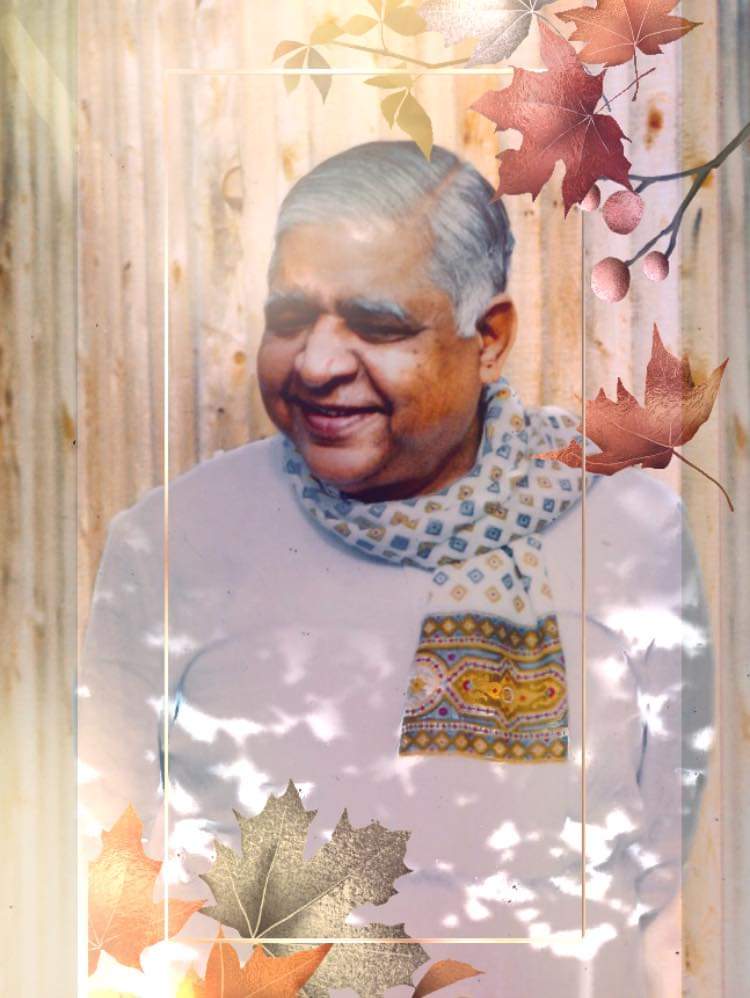
WHAT HAPPENS AT DEATH? (an excerpt from S.N.Goenka)

WHAT HAPPENS AT DEATH? (an excerpt from S.N.Goenka)

Before long, alas! this body will lie

upon the ground, cast aside

devoid of consciousness,

even as a useless log.

To understand what happens at death, let us first understand what death is. Death is like a bend in a continuous river of becoming. It appears that death is the end of a process of becoming, and certainly it may be so in the case of an arahant (a fully liberated being) or a Buddha; but with an ordinary person this flow of becoming continues even after death. 

Death puts an end to the activities of one life, and the very next moment starts the play of a new life. On the one side is the last moment of this life and on the other side is the first moment of the next life. It is as though the sun rises as soon as it sets with no interval of darkness in between, or as if the moment of death is the end of one chapter in the book of becoming, and another chapter of life begins the very next moment.

Although no simile can convey the exact process, still one might say that this flow of becoming is like a train running on a track. It reaches the station of death and there, slightly decreasing speed for a moment, carries on again with the same speed. It does not stop at the station even for a moment. 

For one who is not an arahant, the station of death is not a terminus but a junction from where thirty-one different tracks diverge. The train, as soon as it arrives at the station, moves onto one or another of these tracks and continues. 

This speeding "train of becoming," fuelled by the electricity of the kammic reactions of the past, keeps on running from one station to the next, on one track or the other, a continuous journey that goes on without ceasing.

This changing of "tracks" happens automatically. As the melting of ice into water and the cooling of water to form ice happens according to laws of nature, so the transition from life to life is controlled by set laws of nature. 

According to these laws, the train not only changes tracks by itself, it also lays the next tracks itself. For this train of becoming the junction of death, where the change of tracks takes place, is of great importance. 

Here the present life is abandoned (this is called cuti-disappearance, death). The demise of the body takes place, and immediately the next life starts (a process which is called patisandhi - conception or taking up of the next birth). The moment of patisandhi is the result of the moment of death; the moment of death creates the moment of conception. 

Since every death moment creates the next birth moment, death is not only death, but birth as well. At this junction, life changes into death and death into birth.

Thus every life is a preparation for the next death. If someone is wise, he or she will use this life to the best advantage and prepare for a good death. The best death is the one that is the last, that is not a junction but a terminus: the death of an arahant. 

Here there will be no track on which the train can run further; but until such a terminus is reached, one can at least ensure that the next death gives rise to a good birth and that the terminus will be reached in due course. It all depends on us, on our own efforts. We are makers of our own future, we create our own welfare or misery as well as our own liberation.


https://www.facebook.com/reel/1165961034027014?mibextid=q5o4bk&fs=e&s=TIeQ9V


2 March 2023


Thursday, 27 October 2022

Vedanā in the Practice of Satipațthāna.

 Vedanā in the Practice of Satipațthāna.


The practice of the four-fold satipatthäna, the establishing of awareness, was highly praised by the Buddha in the suttas (discourses). Mentioning its importance in the Mahäsatipathana-sutta, the Buddha called it ekäyano maggo-"the only way for the purification of beings, for overcoming sorrow, for the extinguishing of suffering, for entering the path of truth and experiencing nibbana (liberation)."

In this sutta, the Buddha presented a practical method for developing self- knowledge by means of käyanupassand (constant observation of the body), vedandnupassand of sensation), cittänupassand  (constant observation observation of the mind), and dhammanupassand (constant observation of the contents of the mind). 

To explore the truth about ourselves, we must examine what we are: body and mind. We must learn to directly observe these within ourselves. 

Accordingly, we must keep three points in mind: 

1) The reality of the body may be imagined by contemplation, but to experience it directly one must work with vedand (bodily sensation) arising within it. 

2) Similarly, the actual experience of the mind is attained by working with the contents of the mind. Therefore, as body and sensation cannot be experienced separately, the mind cannot be observed apart from the contents of the mind. 

3) Mind and matter are so closely interrelated that the contents of the mind always manifest themselves as sensation in the body. 

For this reason the Buddha said: 

Vedanā-samosaraņā sabbe dhammä. Whatever arises in the mind is accompanied by sensation. 

Therefore, obscrvation of sensation offers a means-indeed the only means-to examine the totality of our being, physical as well as mental.

There are four dimensions to our nature:

 The body and its sensations, and the mind and its contents. These provide four avenues for the establishing of awareness in satipatthäna.

In order that the observation be complete, every facet must be experienced, as it can by means of vedand

This exploration of truth will remove the delusions we have about ourselves. 

Likewise, to come out of the delusion about the world outside, the truth about the contact of the outside world with our own mind-and- matter phenomenon must be explored. 

The outside world comes in contact with the individual only at the six sense doors: 

The eye,  ears, nose, tongue, body and mind. 

As all these sense doors are contained in the body, every contact of the outside world is at the body level. 

According to the law of nature, with every contact there is bound to be sensation. Every time there is a contact with any of the six sense objects, a sensation will arise on the body. 

Therefore, just as the understanding of vedanā is absolutely essential to understand the interaction between mind and matter within oursclves, the same understanding of vedand is essential to understand the interaction of the outside world with the individual. If this exploration of truth to be attempted by contemplation or intellectualization, we could have easily ignored the importance of vedanā.  

The Buddha's teaching is the necessity of understanding the truth not merely at the intellectual level, but by direct experience. 

For this reason vedand is defined were as follows: 

Ya vedeti ti vedanä, sävedayati lakkhaņā, anubhavanarasă...' 

That which feels the object is vedanā; its characteristic is to experience, its function is to realize the object... However, merely to feel the sensations within is not enough to remove our delusions. Instead, it is essential to understand the ti-lakkhana (three characteristics) of all phenomena. 

We must directly experience anicca (impermanence), dukkha (suffering), (substancelessness) within and anatta ourselves. Of these three the Buddha always gave importance to anicca because the realization of the other two will easily follow when we have experienced deeply the characteristic of impermanence. 

In the Meghiya-sutta of the Udana he said: Aniccasaññino hi, Meghiya, anattasaññā santhāti, anattasaññi asmimānasamugghätam papuņāti dițtheva dhamme nibbānam. 

In him, Meghiya, who is conscious of impermanence the consciousness of what is substanceless is established. He who is conscious of what is substanceless wins the uprooting of the pride of egotism in this very life, namely, he realizes nibbāna. Therefore, in the practice of satipațthaāna, the experience of anicca, arising and passing away, plays a crucial role. 

The Mahasatipatthữna sutta begins with the observation of the body. Here several different starting points are explained: observing respiration, giving attention to bodily movements, ctc. 

It is from these points that we progressively can develop vedanānupassanā, dhammanupassanā. 

However, no matter where the journey starts, there come stations through which everyone must pass on the way to the final goal. These are described in important sentences repeated not only at the end of each section of kayanupassand but also at the end of vedanānupassanā, cittänupassand and each section of dhammānupassand


They are: 

1. Samudaya-dhammänupassi vä viharati 

2. Vaya-dhammänupassi vā viharati 

3. Samudaya-vaya-dhammänupassi vä viharati. 

1. One dwells observing the phenomenon of arising. 

2. One dwells observing the phenomenon ofpassing away. 

3. One dwells observing the phenomenon of arising and passing away. 

These sentences reveal the essence of the practice of satipatthäna. Unless these three levels of anicca are practised, we will not have wisdom. Therefore, in order to practise any of the four-fold satipatthäna one has to develop the constant thorough understanding of impermanence known as sampajañña in Pali. 

In other words, one must meditate on the arising and passing away of phenomena (anicca-bodha), objectively observing mind and matter without reaction. The realization of samudaya-vaya-dhamma (impermanence) should not be merely a contemplation, or process of thinking, or imagination or even believing; it should be performed with paccanubhoti (direct experience). 

Here the observation of vedand plays its vital role, because with vedand a meditator very clearly and tangibly realizes samudaya-vaya (arising and passing away)." 

Sampajañña in fact is knowing the arising and passing away of vedanā and thereby all four facets of our being. It is for this reason that in each of the four satipatthāna, being sampajāno, as well as being ātāpī (ardent) and satimā (aware) are essential qualities and the three are invariably repeated for each of the satipatthāna

And as the Buddha explained, sampajañña is observing the arising and passing away of vedanā." 

Hence the part played by vedanā in the practice of satipațthāna should not be ignored, or this practice of satiputthāna will not be complete.

In the words of the Buddha: 

Tisso imā, bhikkhave, vedanā. Katamā tisso? Sukhā vedanā, dukkhā vedanā, adukkhamasukhā vedanā-imā kho, bhikkhave, tisso vedanā. Imāsam kho, bhikkhave, tissannam vedanānam pariññāya cattāro satipațthänä bhāvetabbā." 

Meditators, there are three types of bodily sensations. 

What are the three? 

Pleasant sensations, unpleasant sensations and neutral sensations. 

Practise, meditators, the four-fold satiputthana for the complete understanding of these three sensations. 

The practice of satipațthāna is complete only when one directly experiences impermanence. Bodily sensation provides the nexus where the entire mind and body are tangibly revealed as an impermanent phenomenon leading to liberation.


{SD}

Source:

Vipassana Research Institute


2nd November, 2022


Tuesday, 12 April 2022

DHAMMA: LIGHT OUT OF DARKNESS by Acharya S.N. GOENKA [ANNUAL MEETING: Dhamma Thali, India January 1, 1993 OPENING ADDRESS]

DHAMMA: LIGHT OUT OF DARKNESS 
by Acharya S.N. GOENKA
[ANNUAL MEETING: Dhamma Thali, India January 1, 1993 OPENING ADDRESS]


My dear Vipassana meditators:


As every year, we have again assembled to review whatever we have done, to find whether there have been any defects, and to understand how to eradicate those defects. We review whatever has been attained, not to develop ego, but with a balanced understanding; and we see how this success can be increased. 

Last, we meet to make practical plans for the future. 

This meeting should not be like other ordinary social gatherings where people debate, pass resolutions, and forget all about it. No! The practical aspect of Dhamma is of utmost importance to us. 

That is why, before starting this annual meeting, most of you participated in a long course, and after the meeting many others of you will do so. This is a good sign. You are giving more importance to the practice, and discussions are based on this foundation. This healthy tradition should be maintained in the future; otherwise our service to suffering humanity will not be successful.

There is suffering, it cannot be denied. All around there is darkness and suffering. People are miserable, and they are groping about in the darkness, not knowing how to come out of misery. 

Throughout the world in the name of different religions there are conflicts, struggles and wars. 

Unfortunately this country, which takes pride in being the land of origin of the pure Dhamma, is also suffering from such conflicts. When the darkness is very deep, it invites light. The way to come out of misery arises from the deepest misery.

It is good that the light has come and that the way is becoming clearer. In the last years a beginning has been made. People have started examining the technique and have found that it gives results. Intelligent, wise people—intellectuals from different communities, sects, countries and traditions—have come to the Ganges of Vipassana, taken a dip and found that it is truly refreshing and fruitful.

Every step on the path has to be examined at the intellectual level: Is it rational, pragmatic and reasonable? 

And then at the actual level of practice: Is it fruitful, is it giving benefit here and now? The path leads you to the goal where you become totally liberated, an arahant. That is good, but what result does it give now? 

It is a long path to reach the final goal of becoming an arahant; is one coming out of misery now? 

Everyone who walks on the path finds it is fruitful. Of course the fruits differ from person to person according to one’s own past accumulations and according to how one works now, but the path is fruitful.

Vipassana cannot be spread by discussions, nor merely by writing articles, giving lectures or trying to prove at the intellectual level that ours is the best. No, it won’t help. It is only by the actual results. There is suffering all around, let people know that there is a way out. And you can do that only by your own way of life. If people find that there is a change for the better in you, that you have attained something which you were missing, they will be attracted. This is how Dhamma will spread.

Just as every town must have schools, colleges, hospitals and gymnasiums, similarly Vipassana will become a necessity throughout the world. There must be some place where mental training is given to control and purify the mind, and there should be no fear that attending these courses will convert people to a particular religion or sect. It would be a great danger to the spread of Dhamma if Vipassana courses converted people to a particular organized religion. It would no longer be Vipassana. Going to a school, hospital or gymnasium one is not converted from one religion to another, and so it is going to a Vipassana course. Vipassana is free from sectarianism. That must become clearer in the minds of those who want to teach it, and clear in the minds of those who want to practise it. If this is missing, then everything will be missing.

The purity of the path is to keep it universal. It has been universal and it should remain universal in the future. It is helpful to one and all. Anyone and everyone who practises is bound to benefit. This is a very important message that should reach the world. And it is possible to spread this message when you yourself show that you have not been converted from one religion to another, but the impurities that you had in the mind are being eradicated by this technique and you have started coming out of your misery. 

This will be the best example of the value of Dhamma.

Another important thing that we have started doing is making the theoretical aspect of Dhamma more widely available. Because the practice was lost in many countries, the meaning of some of the Buddha’s words was not clear and the interpretations were wrong. It is important for a meditator to understand the theoretical aspect of Dhamma in order to see whether what we are practising is correct.

The theoretical aspect of Dhamma will support the practice of Dhamma. But understand that this should not become our main aim. Out of overenthusiasm if we start giving too much importance to the theoretical aspect of Dhamma, and forget the practical part, we will miss everything. This practical aspect of Dhamma is of utmost importance. Keeping this in mind, we have to research the theoretical aspect of Dhamma.

May all of you become flag-bearers of Dhamma, torch-bearers of Dhamma. Take the message of Dhamma throughout the world to help people to come out of their misery.

Generate nothing but compassion, love and goodwill to help more and more people to come out of their misery. We have nothing to do with these organized religions. We have nothing to do with this sectarianism. The suffering, the malady, is universal, and here is a remedy which is also universal. See that it remains universal, and helps people to come out of their misery.

May more and more people come in contact with Dhamma. May more and more people start coming out of their misery. May more and more people start experiencing real peace, real harmony.


 Bhavatu sabba maṅgalaṃ


Friday, 6 August 2021

Ācariya Satya Narayan Goenka and His Teaching 📜Live in the Present Moment, Live in Reality

Ācariya Satya Narayan Goenka and His Teaching
📜Live in the Present Moment, Live in Reality


To live in the present moment is to live in reality. Moments that have passed are no longer real, only memory. Similarly, moments yet to come are unreal; you can only have expectations, fears and hopes of the future.

Living in the present moment means to be fully aware of whatever you experience at this very moment, now - by objectively observing the reality within yourself.

Pleasant, unpleasant memories and hopes, insecurity, fears of the future takes you away from reality of the present moment. This wandering habit pattern of the mind causes problems.

A life not lived in reality, i.e, in the present, is a life of delusion. Delusions defile the mind, causing difficulties in life. 

The wandering, impure mind leads to suffering anxiety, tension, dissatisfaction and frustration.

Strong determined efforts are needed to change this habit pattern of the mind. Stop the mind constantly wandering into the past or future. You train your own mind to remain in reality of the present.

A Vipassana meditator become aware how much the mind rolls in thoughts – past or future. Thoughts are agreeable or disagreeable. You  relish agreeable thoughts, disagreeable thoughts causes suffering. But a Vipassana meditator is with reality when the mind is with sensations, or the natural breath - not with the mind wandering in thoughts.

Sometimes before a thought is completed, another thought arises. Before that thought is completed, a third thought arises. Thoughts arise without sequence or meaning.

A Vipassana meditator realizes how a wandering mind suffers from rolling randomly in thoughts of past or future – generating craving or aversion, and becoming restless, agitated, unhappy. 

The wonderful practice of Vipassana enables us to live in the present moment. 

Be master of this present moment, and be master of your future. 

Attā hi attano nātho, attā hi attano gati. 

You are your own master, you make your own future

By bare observation of sensations, without blindly reacting with craving and aversion, the mind starts getting purified at the deepest level. 

For a relative beginner of Vipassana, there may be only a few moments of remaining purely in the present, not rolling in thoughts of past or future. The mind is fully concentrated in the truth of the present moment – at the level of physical sensations. No delusion, no ignorance. 

A moment of purity from Vipassana practice has a strong impact on old impurities accumulated in deeper levels of the mind. Accumulated impurities and this moment of purity come in explosive contact as negative and positive forces - like eruption of a volcano within. As a result, some deep-rooted impurities may surface as various physical or mental discomforts - such as pain in the legs or in the head, or fear or agitation. What seems a problem is actually signs of progress in meditation. 

When cutting open an abscess, pus is bound to surface. Similarly, during this Vipassana surgery of the mind, some underlying pus is coming out of the wound. Although unpleasant, this is the only way to get rid of the pus, to remove impurities that for long are cause of one's misery.

May the munificent, benevolent, universal nature of Vipassana practice reach all suffering beings, thereby bringing peace, happiness and liberation.


May all beings be happy!


______________


Words of Dhamma


This mind that wanders wherever it wishes, desires, wherever it sees pleasure, I will first make it steadfast. I will train it thoroughly like a mahout with a goad trains a wild elephant.

Dhammapada 326

Friday, 11 June 2021

Ācariya Satya Narayan Goenka and His Teaching 📜Walk The Path Yourself

 Ācariya Satya Narayan Goenka and His Teaching
📜Walk The Path Yourself 


One who goes to a meditation centre to learn Vipassana should clearly understand that the first step is to objectively observe the truth about one's own natural respiration.

 No word should be added to the natural breath even by oversight. One can concentrate the mind and make it calm by repeating any word. But the accumulation of defilements is blazing within, just as it did earlier. 

At any time, these sleeping volcanoes can erupt and overpower the mind and make one miserable.

 Therefore, those who want to eradicate their defilements at the depth of the mind should not use any word. 

In other types of meditation, the use of a word has its own benefit. But it cannot eradicate the defilements at the depth of the mind.

 One may repeat a word to concentrate the mind, just as a mother sings a lullaby to put her child to sleep. 

She keeps repeating the lullaby and the child falls asleep. In the same way, when a word is repeated, the mind will become concentrated on that. But this word becomes an obstacle in the objective observation of the truth in the present moment.

 I can understand this obstacle because I myself used to meditate with the help of words. This has been confirmed by the experiences of others who have faced the same obstacles. A great saint from India, Kabir, said the same thing. As one continues meditating with the help of a word, an echo arises from within that is known as an ajapā jāpa (unchanted chant). This takes the form of a fine string and the string itself becomes an obstacle in the investigation of the truth of the universe within. Therefore, one is unable to attain the Ultimate Truth, beyond mind and matter.

 Kabir says:

Tāgā ṭūṭā, nabha meṃ vinasagā, sabad ju kahāṃ samāyī re.

The string has broken; it cannot remain in the universe within. How can the word that is so gross remain!

 Therefore, one should not use any object that will become an obstacle to future progress on this path. One has to learn the truth about oneself at the experiential level: about one's body and mind and the interrelation between these two; and about the generation, multiplication and eradication of the mental defilements. One has to observe the truth as it is, just as it is. Then, one will keep progressing. The process of respiration is related to both: the body and the mind. 

By observing respiration objectively, the truth pertaining to both body and mind will become clearer and clearer.

 There may be initial difficulties. One who wants to eradicate the defilements from the depth of the mind will have to face these difficulties. The mind is so restless, so unsteady, not only at the surface level but also at the depth. Like a monkey, this monkey-mind keeps jumping from one branch of a tree to another. 

As soon as it leaves one branch, it holds another. It is so agitated, so disturbed, so miserable. It is wild; it has to be tamed. And one has to do this work very patiently.

 This work is similar to the task of taming a wild animal, like a wild buffalo or a wild elephant. A wise and experienced person, who has to tame a wild animal, works very patiently and persistently because the wild animal does not become tame as soon as he starts the work. At home, one cannot do this work continuously. Also, one will not be able to do this work patiently in spite of the difficulties because there is no teacher to give proper guidance. But when one joins a course at a Vipassana centre, one is able to work continuously and despite the difficulties, one keeps on making efforts to tame the mind.

 It is not possible for one's mind to become totally concentrated and free of defilements as soon as one starts working. The mind will wander repeatedly. And when it wanders, it will be overcome by craving, overcome by aversion. And because of this, the meditator will become more and more agitated. "Oh, what kind of mind am I carrying! It is so full of craving, so full of aversion. It does not stay in the present at all. 

Our teacher says that one should live in the present but my mind does not stay in the present at all. It is so miserable." One has lost patience. One has lost equanimity. One has lost the balance of one's mind. How can the work proceed? One has to work very patiently. If the mind wanders, one accepts the present reality that it has wandered. If the mind is full of craving, one accepts the present reality that it is full of craving. 

One merely accepts: "At this moment, my mind is full of craving." or "At this moment, my mind is full of aversion." Thus, one keeps observing the state of the mind, as it is. 

One observes the natural respiration dispassionately, objectively, without any personal identification.

 Something has happened at the physical or mental level and one understands, "I am observing" One starts the work in this way. As one progresses, one will reach a stage where this "I" will disappear, this "am observing" will also disappear. Something has happened and one understands, "It is being observed." There is no observer; there is only objective observation. 

Influenced by Vipassana, Patanjali, an Indian sage who lived a few centuries after the Buddha, said, "Draṣṭā dṛśīmātra"- In seeing there should be only seeing. Later, this objective observation also ends, and bare awareness remains at the level of direct experience. This awareness is samma ditthi-right understanding, right knowledge. This eventually takes the Vipassana meditator to the final stage of full liberation.

 Initially, one has to pass through many difficulties. When a wild buffalo or wild elephant enters any human habitation, it causes so much harm, so much destruction, so much panic. But after one has tamed the wild beast, by working very patiently, it is of such immense help. Its entire strength is utilised constructively.

 The mind is more powerful than a thousand elephants. When it is destructive, it does more harm than a thousand wild elephants. The same mind, when tamed, will be of much more service than a thousand tamed elephants. A tamed mind will cause much happiness. But one has to work very patiently.

 A meditator should also understand that "I have to do this work oneself. It is my responsibility." This is not out of egoism. Sometimes, because it was lost from India for such a long time, some people do not understand this technique of Vipassana properly and criticise it. They consider the idea of liberating themselves by removing their own defilements as egoistic. Oh no! This meditation technique will take one to a stage where the ego dissolves completely and there is only anattā (egolessness). The idea of "I", "mine", "my soul" will come to an end.

 Liberating oneself is not egoism but a responsibility. Just as one bathes every morning because one is responsible for keeping one's body clean. Who else will do it? Is one inflating the ego by bathing daily? 

Where is the question of inflating the ego? It is one's own responsibility. If the body becomes dirty, it becomes diseased. It has to be kept free from disease, therefore, one should clean it. Similarly, the mind has become impure. Who has made the mind impure? It is one's own responsibility. One did it out of ignorance because one did not have proper understanding. Now the job of cleaning it is one's own responsibility. One has to do it oneself; no one else can do it.

 One often suffers from the delusion, "I am so helpless, I am so weak, how can I become liberated? 

Someone will have mercy on me. Someone will liberate me out of compassion." Such a deluded person should understand, "Why should the saviour liberate me alone? Am I someone special? Just because I have become an expert at false praise, will the Almighty liberate me?" Why should the saviour liberate you alone? The entire world is so miserable, and yet, he does not liberate anyone. It is clear that each person has to liberate oneself by removing one's own defilements. Each person has tied knots within, and these knots have to be untied by one's own efforts.

 Someone full of compassion might show us the way. One who has reached the stage of liberation by walking on the path, a Buddha, will show the way. But one has to actually walk on this path oneself. One has to cover the entire path by walking step by step. At the start, someone might compassionately say, "Hold my hand and walk." Someone may walk alongside for a while but still one has to walk the path oneself. The sooner a person gets rid of the delusion that someone else will carry him or her on the shoulders to the final goal, the more beneficial it is for such a person.

 Why would any unseen force generate defilements in the minds of all living beings and make them miserable? One has accumulated defilements oneself; one will have to remove the defilements oneself. Someone might lovingly show us the path.

 As the Buddha says:

"Tumhe hi kiccaṃ ātappam, akkhātaro tathāgatā."

You have to do your own work; Enlightened Ones only show the path.

 The Buddha could show the path because he himself had walked the entire path and had reached the final goal. That is why he had become a tathāgata (an enlightened person). Out of compassion for all suffering beings, he lovingly explained to people that it is their responsibility to walk on the path to liberation. The sooner a person understands that one has to walk on the path oneself, the more fortunate that person is. 

One who hopes that someone else will liberate him because he is so helpless will never walk on the path. One will have to make the effort oneself. There will be many difficulties and obstacles on the path. One may stumble and fall but one should get up and start walking again until one reaches the stage of liberation.

The Buddha said:

“I explain the path very clearly. If someone is satisfied only with my explanation and bows down three times and says, 'Sādhu, sādhu, sādhu, you have explained very well, sir.' but does not take a single step on the path, how will he reach the final goal?

One who starts walking on the path and takes ten steps will be ten steps closer to the final goal. One who takes a hundred steps will be a hundred steps closer to the final goal. And one who takes all the steps on the path will reach the final goal. You have to walk on the path yourself.”

All those who have started walking on the path of liberation, the path of pure Dhamma, have started walking on the path of total purification of the mind. They have started walking on the path of total liberation, the path that leads to real happiness, real peace, real harmony, real liberation. Those who walk on the path of pure Dhamma find real happiness, real peace, real harmony, real liberation from all the miseries of life.


May all beings be happy!


_________________


Words of Dhamma


Tumhehi kiccaṃ ātappaṃ, akkhātāro tathāgatā;

paṭipannā pamokkhanti, jhāyino mārabandhanā.


You have to do your own work; Enlightened Ones will only show the way.

Those who practise meditation will free themselves from the chains of death.


Dhammapada 276


Saturday, 5 December 2020

The Vessel of Dhamma

 The Vessel of Dhamma


The Dhamma is like a brimming vessel: nothing more is required to fill it, and any addition will be at the sacrifice of what the vessel already contains. 

Often the urge to add may be well-intentioned, in the hope of making the Dhamma more attractive to people of various backgrounds. “What harm is there in adding something which is itself good?” someone may ask. Understand: the harm is that the Dhamma will eventually be relegated to the background and forgotten. Additions may offer mundane benefits, but the goal of Dhamma is supramundane: liberation from suffering. Something may be harmless in itself but it becomes most dangerous if it causes us to lose sight of this goal. 

Equally insidious are moves to abridge the Dhamma in any way. Again the intention may be good: to avoid offence to people who might find aspects of the teaching hard to accept. 

Against such urgings we must recall that the Dhamma was not devised to suit any particular set of views; it is the Law of Nature, rediscovered by the master Teacher 2500 years ago. Every part of it is needed to lead on to the final goal. Omitting an aspect that some find controversial— whether sīla, samādhi, or paññā—may be a way to curry favor, but what is that worth if the efficacy of the Teaching is lost? We seek not popularity but liberation for ourselves and others. 

Given a bowl of nectar, someone cries, “It is too sour!” Another says, “It would be sweeter with a little sugar.” Very well, mix a little sugar with it; there is no harm in doing so. But if the next time the bowl is offered, more sugar is added, and more every time, eventually the taste of nectar will be lost. Then people will mix together sugar and water, and drink that mixture calling it nectar, and wonder why their thirst is not slaked. So with the nectar of the Dhamma: imbibe it in its pure form, without any alteration, in order truly to benefit from it. 

Words are only words; to attract others to the Dhamma, far more useful is the example you set by your way of life. Therefore the great Teacher said, Brahmacariyapakāsetha: be a shining example of the Dhamma by applying it yourself. This is the best way to encourage others to practice it. 


Goenkaji (Annual Meeting, VIA, 1989)


http://news.dhamma.org/wp-content/uploads/1989-16-2-VNL-en-A4.pdf


Monday, 28 October 2019

"My Mother's Death in Dhamma" By S.N. Goenka.

"My Mother's Death in Dhamma"
By S.N. Goenka.


(In 1985 Goenkaji was asked by a student whether it is possible to feel sensations at the time of death. In reply, he related the following story about his adoptive mother’s death.)

I was one of six sons. I was adopted at a young age by my uncle and aunt, Mr. Dwarkadas and Mrs. Ramidevi Goenka, who at the time had six daughters but no son.

My adoptive mother was a devoted student of my teacher Sayagyi U Ba Khin. She had made great progress in her seven years of practicing Vipassana under Sayagyi’s guidance, and Sayagyi was quite fond of her. She was the only student of Sayagyi's to die in his presence as far as it is known.

In 1967 when my mother was about 70 years old, she was diagnosed as having an advanced stage of liver cancer. We in the family did not know how long she had suffered because she had never complained. It was only one week before her death that she spoke mildly about some pain she was having in the liver.

When her daughter-in-law (my wife, Mrs. Goenka) asked her to describe the pain, she replied, “Well, the pain is similar to that which a mother suffers when she gives birth—except that this has no break.”

------------
She had been meditating very seriously for seven years before her death. She went to the meditation center every time there was a course; whether it was for ten days, one month or any other period, her bag was always packed.

She also did self-courses at home.

Although she came from a devotional background, she was no longer interested in rites and rituals. She had left these behind.

From the time she was diagnosed as having cancer until she died seven days later, she would not allow anyone to talk to her about her disease. She gave strict orders that only Vipassana meditators could come into her room, and then, only to meditate. They could meditate for half an hour, an hour or many hours; and then they were to quietly leave.

In our Hindu community, it was customary for the friends of a dying person to come to the house to pay respects. My mother was very popular in the community and she had many people wishing to visit her in her final illness. For those who were not meditators, she gave instructions that they could visit but that they could not come into her room.

They were simply to sit quietly outside a door of netting. My mother was not interested in receiving treatment, but as her son, it was my duty to arrange it for her. Every day our family doctor and a specialist visited her. When they questioned her about her pain she said, “Yes, there is pain. So what? Anissa, anissa (the Burmese way to pronounce anicca-impermanence).” She attached no importance to it.

---------------

One morning the specialist was concerned that the pain of the cancer might be interfering with her sleep. When he asked, “Did you sleep soundly last night?”

she answered, “No, I had no sleep.”

He wrote a prescription for some sleeping pills which she took that night. The next day, again the doctor came and asked if she had slept, and she replied, “No.”

Again on the third day he asked, and again she responded, “No.”

Even though she did not complain, the doctor worried that she was not sleeping because she was suffering so much. Because of drug shortages, he wrote prescriptions for three different strong sleeping pills with the intention that only one be purchased. However, all three could be purchased and by mistake she was given a triple dosage. The next morning all she reported was that, although her eyelids had become heavy, she had not slept all night.

Then it occured to me that the doctor did not understand.

To a Vipassana meditator sleep is unimportant, especially on the deathbed. Despite sedation my mother’s strong determination had kept her alert. She had been practicing Vipassana every moment. I explained to the doctor that sleeping pills would not help but he did not understand.

He said, “I have given her this medicine and even this does not help her sleep. That means she is in great pain.”

I said, “It’s not the pain, it is Vipassana which is keeping her awake, aware of her sensations.”

As we came out of the room he said, “There is something special about your mother. There is a woman of the same age in a neighboring house who also has liver cancer. She is in great misery and cries out in pain, but we cannot console her. We feel so sorry to see her in this wretched condition. And here is your mother who, when we come, just smiles.”

-------------------

The night she died some of the family members were meditating with her.

At 11:00 pm she said to us “It is so late. All of you go to sleep now.”

About midnight the nurse who was on duty noticed that there was no pulse in her wrists. She became frightened and, thinking death was near, asked, “May I awaken your children?”

My mother said, “No, no, my time has not yet come. When my time comes I will tell you.”

At 3:00 am she told the nurse, “Now is the time.Awaken all the family members. I have to go now.”

And so we were all awakened. We came and discovered there was no pulse in many parts of her body.

We telephoned Sayagyi and the family doctor who both came quickly. When the doctor arrived he said she had only a few minutes left.

Sayagyi arrived shortly thereafter. My mother was lying on her back. Even though there was no pulse left in her wrists (it was as if they were dead), as soon as she saw her teacher, she found the strength to raise her hands and fold them together, paying respect to him.

About five minutes before she died she looked at me and said, “I want to sit.”

I looked at the doctor who said, “No, in a few minutes she is going to die. Let her die peacefully. If you move her it will be a painful death. Already she is suffering great pain. Leave her.”

She heard what he said but again told me, “No, let me sit.”

I thought, “This is her last wish. She doesn’t care about pain. What the doctor says is unimportant. I must help her to sit.”

So I placed some pillows at her back. With a jerk she sat up in the meditation position with folded legs and looked at all of us. I asked her “Do you feel sensations? Do you feel anissa?”

She touched the top of her head and said, “Yes, yes, anissa.”

She smiled and in half a minute she died. In life her face had a glow. Now in death also, there was a glow on her face.

(Vipassana international newsletter. April'92)