Labels

Saturday, 3 April 2021

To practice mindfulness of the body, you might like to lie down and practice total relaxation.

To practice mindfulness of the body, you might like to lie down and practice total relaxation. 

Allow your body to rest, and then be mindful of your forehead. "Breathing in, I am aware of my forehead. 

Breathing out, I smile to my forehead." Use the energy of mindfulness to embrace your forehead, your brain, your eyes, your ears, and your nose. 

Every time you breathe in, become aware of one part of your body, and every time you breathe out, smile to that part of your body. Use the energies of mindfulness and love to embrace each part. Embrace your heart, your lungs, and your stomach. "Breathing in, I am aware of my heart. 

Breathing out, I embrace my heart." Practice scanning your body with the light of mindfulness and smiling to each part of your body with compassion and concern. 

When you finish scanning in this way, you will feel wonderful. It takes only half an hour, and your body will rest deeply during those thirty minutes. Please take good care of your body, allowing it to rest and embracing it with tenderness, compassion, mindfulness, and love.


- Thich Nhat Hanh

#ThichNhatHanhgems  #ThichNhatHanh  #Mindfulness  #Compassion  #Love  #Healing


Eighteen Talks on the Training of the Heart, by Phra Ajaan Lee Dhammadharo, translated by Thanissaro Bhikkhu

Eighteen Talks on the Training of the Heart, by Phra Ajaan Lee Dhammadharo, translated by Thanissaro Bhikkhu


An intelligent person knows how to use both good and evil without causing harm.

Arahants even know how to use their defilements so as to be of benefit. When sages use common language, it can serve a good purpose. But when fools use fine language, it can be bad. 

If they use bad language; it’s even worse.

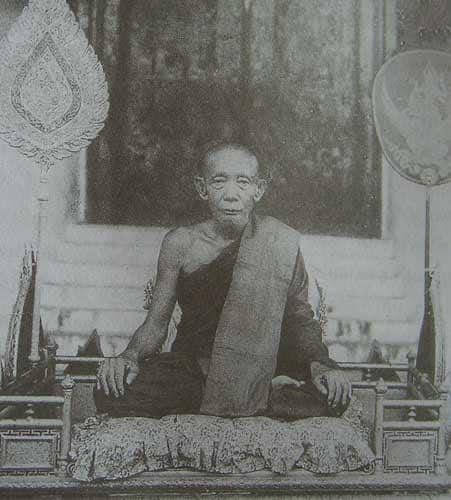
An example of a person who used common language to serve a good purpose is Chao Khun Upālī (Siricando Jan).

One time he was invited to give a sermon in the palace during the weekly funeral observances for a young prince whose death had caused a great deal of sorrow to the royal relatives.

On the previous weeks, some very high-ranking monks from Wat Debsirin had been invited to give sermons and they had all gone on about what a good man the prince had been, and how sad it was that he had come to such an untimely end that prevented him from living on to do more good for the world. 

This had caused the relatives to cry all the more.

When it came Chao Khun Upālī’s turn to give a sermon, though, he didn’t carry on in the same vein at all. Instead, he started out with the theme of mindfulness of the body, describing the ugliness and foulness of the body, which is full of repulsive and disgusting things: snot, spit, dandruff, sweat, etc., etc.

‘When the body dies, there’s not one good thing about it,’ he said, ‘but people sit around weeping and wailing with tears streaming in tracks down their cheeks and mucus running out their noses and dribbling down to their chins.

With their faces all in a mess like this, they don’t look the least bit attractive.’

This made the relatives who had been crying so embarrassed that they stopped crying immediately, after which they expressed a great deal of admiration for Chao Khun Upālī and his sermon.

This is why it’s said that a person who uses a sharp tongue with skill is a great sage. If people are wise, then no matter what they say, it serves a good purpose because they have a sense of time, place, and the people they’re talking to.

If something will serve a purpose, even if it sounds unpleasant, it should be said.

If it won’t serve a purpose, even if it sounds pleasant, don’t say it.

*     *     *     *     *     *     *
From Food for Thought: Eighteen Talks on the Training of the Heart, by Phra Ajaan Lee Dhammadharo, translated by Thanissaro Bhikkhu
https://www.dhammatalks.org/books/FoodForThought/Contents.html

PDF: https://www.dhammatalks.org/Archive/Writings/Ebooks/FoodforThought_181215.pdf

About Tan Chao Khun Upālī Guṇūpamācariya
(March 20, 1857 ~ 19 July, 1932)
========================

Chao Khun Upālī Gunupamācariya (Jan Siricando), a childhood friend and monastic senior of Ajaan Mun's, was one of the highest ranking monks in Thailand in the early years of the 20th century.

Despite belonging to the ecclesiastical elites, Chao Khun Upālī did not share their distrust and contempt of Ajaan Mun and the Thai Forest Tradition. In fact, because he had recognized the admirable qualities and spiritual attainments of Ajaan Mun, he supported and stood up for him and his disciples, and even acted as the preceptor for two other disciples of Ajaan Mun widely regarded as arahants- Luang Pu Waen and Luang Pu Teu.

His courage to be truthful actually got him temporarily stripped of his title and placed under ‘monastery arrest’ for reportedly criticizing King Rama VI’s request that monks encourage their followers to donate money for a battleship for the Royal Thai Navy.

Ajaan Mun highly respected and praised Chao Khun Upālī, telling his close disciples that Chao Khun Upālī was an arahant with all the attainments it was possible to have. However, for all his accomplishments, Chao Khun Upālī was most well known for the excellence of his Dhamma teaching.

~~~~~~~~~~~~~~~~~~~~~~~

From various sources, including the Wide Angle Lens site by Hāsapañño Bhikkhu. See  https://sites dot google dot com/site/wideanglewilderness/translations for translations of Chao Khun Upālī's teachings.  (Replace 'dot' with '.' to access the site as Facebook forbids its appearance in posts.)

N.B. Chao Khun Upālī was the preceptor and teacher of Somdet Mahawirawong (Tisso Uan) mentioned in the Autobiography of Ajaan Lee (See https://www.facebook.com/AjaanLee/photos/a.647987305261832/2675569449170264/)

Although Somdet Uan was one of the strongest ecclesiastical opponents of the Thai Forest Tradition and their two founders, Luang Pu Sao and Luang Pu Mun, he eventually became one of their most powerful supporters, in part due to what he witnessed of the transformative effect the Forest Tradition ajaans had had on the state of Buddhism in places where their monasteries were established, and also because he entered samadhi after receiving guidance from Ajaan Lee and could personally attest to the veracity of the Thai Forest Tradition's teachings.

Besides Ajaan Lee, Ajaan Singh Khantiyagamo (one of the first disciples of Ajaan Mun) and Ajaan Funn Ācāro (who became Rama IX's personal teacher) were two other senior Thai Forest ajaans who personally attended to Somdet Uan and guided his meditation practice.


“The mind is the mind regardless of any religion he or she believes in.”

The teachings of Ajahn Suchart.


“The mind is the mind regardless of any religion he or she believes in.”

⋆ ⋆ ⋆

Question (F): How about sharing of merits if the deceased are not Buddhists or are not familiar with Buddhism?

Than Ajahn: It doesn’t matter.

This is the law of nature. It doesn’t mean you have to be a Buddhist. The mind is the mind regardless of any religion he or she believes in.
-
Question (F): What about the tradition of doing prayers to the deceased, like 7 days prayers after their deaths or prayers during a hundred days?

Than Ajahn: It’s just a way of prolonging the separation from the deceased. People don’t want to cremate the person they love so soon and so sudden. 

Therefore, they keep the body for a hundred days. And during these 100 days, they take the opportunity to make merit for themselves and share it with the departed ones. That’s all.

It’s just a tradition. Sometimes, people don’t want to lose someone even though he or she has already died. People don’t want to burn the body immediately. They want to keep the deceased’s body for a few more days.
-
Question (F): So, it doesn’t really matter if we don’t do those things?

Than Ajahn: The Buddha had said to his disciples to keep his body for 7 days. Let people paid respect to his body for 7 days and after that they can cremated it. Luangta Mahā Boowa had said to just keep his body for one day.

The body doesn’t mean anything once the person is dead. It doesn’t do anything.

It’s just the material thing. So, whether you keep it or you don’t keep it, there is no difference. The longer you keep it, the more responsibility you have to bear to look after the dead body.
-
Question (F): So, Is it the same thing with praying or chanting that we do for the dead?

Than Ajahn: You should do it regardless of whether a person has died or is still alive because chanting is a method of meditation.


Youtube: “Dhamma in English, Nov 9, 2018.”

By Ajahn Suchart Abhijāto
www.phrasuchart.com

Latest Dhamma talks on Youtube: https://www.youtube.com/channel/UCi_BnRZmNgECsJGS31F495g

"The levels of the mind based on merit and demerit"

The Teaching of Ajahn Suchart.


"The levels of the mind based on merit and demerit"


“...When a person dies, breath (wind) exits but does not enter anymore. Wind is discharged and gives out a bad smell. Water oozes out and heat (fire) fades away.

The body is then cool and no longer warm like a body that is still alive. If it is left for a long time, the body will wither, dry up, decay, and ultimately disintegrate into the earth.

This is the body that dwells in the world of elements.

But the mind that dwells in the supramundane world is not affected by whatever happens to the body.

When the body has stopped working, communication and concern between mind and body is cut off.

The mind that still has craving will seek out a new body.

These are matters concerning the mind and the body.

As for the mind itself, there are many different levels based on the merit and demerit it has done before:

A mind with merit (good, skilful qualities and actions) ranges in value from 0 to +100.

A mind with demerit (bad, harmful, evil, unskilful qualities and actions) ranges from 0 to -100…”


By Ajaan Suchart Abhijāto
www.phrasuchart.com

Youtube: Dhamma in English
https://www.youtube.com/channel/UCi_BnRZmNgECsJGS31F495g

Friday, 2 April 2021

“The Dhamma practice aims at eliminating wants and desires in order to bring peace to your heart.”

The teachings of Ajahn Suchart. 


“The Dhamma practice aims at eliminating wants and desires in order to bring peace to your heart.”

"The Dhamma practice aims at eliminating wants and desires in order to bring peace to your heart. It is a waste of time to look at things that do not extinguish desires. Take, for example, the sun and the trees. 

These bring you nothing useful because they are not things that create problems.

You should look at things that bring you problems, things that create turmoil and suffering in your heart. You should look at them—things such as deterioration of your body and that of your loved ones, so you will accept the fact that one day all of us will end up this way.

Our bodies as well as those of our loved ones will one day stop functioning, becoming ashes and bone fragments.

That is how you should look.

When looking at the person you desire to have sexual relationship with, you should see the skeleton within the body. 

If your loved one dies today, can you still think of having an intimate relationship with this person?

You can be with your loved one while he or she is alive, but when your loved one is dead, you will think that it is a ghost lying there and you will not want to be with him or her any more. This is how you should think in order to extinguish sexual desire because sexual desire does not bring peace.

If you want happiness generated by peace or calm, you must eliminate your sexual desire. You must regularly contemplate loathsomeness (asubha).

Think about the unattractiveness of the body.

Think about the situation when one is dead for 3 days and the body decomposes and emanates stench. Do you still want to have sexual relationship with this body? This way of thinking will extinguish your desire. You can then live alone, and your heart will have peace. You will achieve genuine happiness without the help of impermanent things. As someone you care about is impermanent, when this person is gone, you will be sad and lonely. If you have happiness in your heart, you do not want anything else.

That is the reason why you should contemplate eliminating everything from your life.

You should be aware that material things will eventually leave us or will deteriorate.

Even our own body will also deteriorate. However, the deterioration of the body does not mean that you will no longer be living. You are still alive; however, you have to decide what kind of existence you will have. You will either have a miserable existence or you will be free of misery.

If you accept the impermanence of your body, you will escape misery, be indifferent and happy like nothing has happened. If you use wisdom (paññā) in your contemplation, you will see that it is even better not to have to take care of your body any longer because taking care of it is such a burden.

From the time you get up in the morning until the time you go to sleep at night, you have to breathe, look for water to drink, prepare food to eat, clean your body, and go to the toilet when needed. Everyone’s body requires such activities.

Without body, such activities are not required.

Using wisdom, you will conclude that death is a good thing. Death relieves all responsibilities and burden. If you still have your body, even though there is no physical desire or suffering, you will still have the responsibility of taking care of your body. The Lord Buddha himself had to go around taking alms, eating, taking a bath, and taking medicine when sick.

Therefore, you should contemplate deterioration of everything so that you will not hold on to them; you will not cling to your worldly possessions to provide you with happiness. This is because you have more genuine happiness. 

If you have peace of mind, you do not need anything else. If you can let go, your mind will experience happiness, calm, and comfort.


You will not be mistaken by clinging to or coveting this and that in your quest for happiness."

“My Way”

By Ajahn Suchart Abhijāto
www.phrasuchart.com

Latest Dhamma talks on Youtube: https://www.youtube.com/channel/UCi_BnRZmNgECsJGS31F495g

CONTROL YOUR MIND

 CONTROL YOUR MIND


Excerpt from a Dhamma talk by Ven. K. Sri Dhammananda

A man’s mind influences his body profoundly. The mind has just as much potential to be a medication as it has to be a poison. When the mind is vicious, it can kill a being, but when it is steady and diligent, it can benefit others. When the mind is concentrated on right thoughts, and supported by right effort and understanding, the effect it produces is immense. A mind with pure and wholesome thoughts leads to healthy relaxed living.

The Buddha says: “No enemy can harm one so much as one’s own thoughts of craving, hate, jealousy and so on”. One who does not know how to adjust one’s mind according to circumstances is as if dead. Turn your mind inwards, and try to find within yourself. It is only when the mind is controlled and properly directed that it becomes useful to its owner and society. 

A calm attitude at all times shows a man of culture. It is not too hard for one to be calm when things are favourable, but to be composed when things are wrong is hard indeed. It is this difficult quality that is worth achieving, for by exercising such calm and control, a man builds strength of character.


Sadhu! Sadhu! Sadhu! 


Thursday, 1 April 2021

How to Maximise Good Results from Making Merit

How to Maximise Good Results from Making Merit


1. Preparing our minds before tamboon 

This means that before doing merit, one should have goodwill and good intentions and feel happy with the merit we are going to do. 

First, we have to prepare things for alms-giving. The alms should be found or bought in a morally clean way and with clean money. 

When we prepare or go to buy things for alms-giving, we should be happy and pleased with what we are doing no matter how much we spend for this. We should bear in mind that we are doing the right thing. This means the will and intention to do so is good and pure. 

2. Our minds during merit-making

After the things are prepared, now we are ready to do alms-giving. Suppose we want to offer the alms to a certain monk in a certain Wat. We will first come to see him, pay homage to the Buddha image and to the monk. 

We might formulate our intention to observe the 5 precepts, expressing them in a vow ("I undertake the 5 training rules: to refrain from taking life, from stealing, from sexual misconduct, from lying and from taking intoxicants".) 

This is to purify ourselves. The monk, as a receiver, has to be pure too which is completed with the monk's 227 precepts. 

If both the donor and the receiver are morally pure and ready, then we present the alms to the monk respectfully, and mindfully. 

3. Post merit-making 

When the monk receives the alms already, he will willingly bless us and we will wholeheartedly receive the blessing. We always feel happy whenever thinking of the good deed we have done. This is so-called Aparapara chetana or good feeling after doing merit.  

The most important thing in doing merit is one's will and intention. No matter how much the alms cost or how great in quality and quantity, the alms has to be morally pure, we must have good intentions, and the one who receives it has to be pure and have good intention too. If all the three components are united correctly, then we will receive a great deal of merit. 

That means we always feel happy whenever thinking or talking about the alms-giving we have done. 

After that we should extend our good feelings, which means dedicating our merit and wishing all beings to be well and happy like how we are feeling after that good experience [i.e. transference of merit].


Phra Ajaan Plien Panyapatipo

Wat Aranyawiwake, Mae Taeng District

Chiang Mai, Thailand


【🌷Fabush 🌷】

The Buddha once said: Of all the offerings, the offering of the Dhamma is the most auspicious offering❗

For better living conditions, one must create the right cause❗ The right cause is through giving.  Giving does not necessarily involve money.

Do three good deeds every day. Acts of kindness will generate the good results.  It is not difficult to do three good things every day- Being kind, seeing only goodness, harbouring good intention, bearing only good thoughts in every single moment, having good intentions arise, all actions done whether through body, speech and mind are for the benefits of others. 

With all these virtues, one can accumulate a lot of good merits in a day. 

Now the most convenient ways of sharing Dhamma are through Facebook, Weibo, WeChat, WhatsApp, LlNE, Viber, etc........ 

It doesn't cost a penny to share and forward the Dhamma to others. The sharing of Dhamma generates great and endless good deed and it is also an act of benefitting others as well as oneself.


❤️🌹🙏❤️🌹🙏❤️🌹🙏❤️🌹