Labels

Wednesday, 18 August 2021

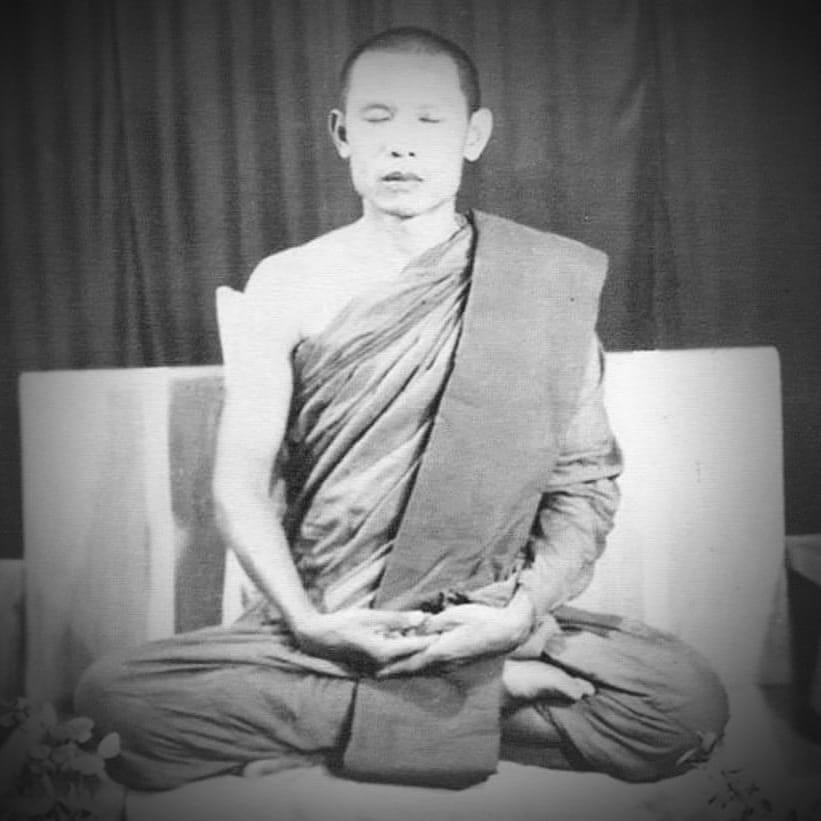
The Art of Letting Go AUGUST 17, 1956

The Art of Letting Go  
AUGUST 17, 1956


“The purpose of training the mind to be still is to simplify things. When things are simplified, the mind can settle down and rest. And when the mind has rested, it'll gradually become bright, in and of itself, and give rise to knowledge. But if we let things get complicated — if we let the mind get mixed up with sights, sounds, smells, tastes, tactile sensations, and ideas — that's darkness. Knowledge won't have a chance to arise.

When intuitive knowledge does arise, it can — if you know how to use it — lead to liberating insight. But if you let yourself get carried away by knowledge of the past or future, you won't get beyond the mundane level. 

In other words, if you dabble too much in knowledge of physical things, without gaining wisdom with regard to the workings of the mind, it can leave you spiritually immature.

Say, for example, that a vision arises and you get hooked: You gain knowledge of your past lives and get all excited. Things you never knew before, now you can know. Things you never saw before, now you see — and they can make you overly pleased or upset. Why? Because you take them all too seriously. You may see a vision of yourself prospering as a lord or master, a great emperor or king, wealthy and influential. If you let yourself feel pleased, that's indulgence in pleasure. You've strayed from the Middle Path. Or you may see yourself as something you wouldn't care to be: a pig or a dog, a bird or a rat, crippled or deformed. If you let yourself get upset, that's indulgence in self-affliction — and again, you've strayed from the path. 

Some people really let themselves get carried away: As soon as they start seeing things, they begin to think that they're special, somehow better than other people. They let themselves become proud and conceited — and the right path has disappeared without their even knowing it. If you're not careful, this is where mundane knowledge can lead you.

But if you keep one principle firmly in mind, you can stay right on the path: 

Whatever appears, good or bad, true or false, don't let yourself feel pleased, don't let yourself get upset. 

Keep the mind balanced and neutral, and discernment will arise. You'll see that the vision or sign displays the truth of stress: it arises (is born), fades (ages), and disappears (dies).

If you get hooked on your intuitions, you're asking for trouble. Knowledge that proves false can hurt you. 

Knowledge that proves true can really hurt you. If what you know is true, and you go telling other people, you're bragging. If it turns out to be false, it can backfire on you. This is why those who truly know say that knowledge is the essence of stress: It can hurt you. 

Knowledge is part of the flood of views and opinions (ditthi-ogha) over which we have to cross. 

If you hang onto knowledge, you've gone wrong. 

If you know, simply know, and let it go at that. You don't have to be excited or pleased. You don't have to go telling other people.

...So whatever you know, simply be aware of it and let it go. Don't let there be the assumption that "I know." When you can do this, your mind can attain the transcendent, free from attachment.”


Source: The Art of Letting Go.

AJAHN LEE

https://www.accesstoinsight.org/lib/thai/lee/inmind.html#art


“You have to have both requisites (for your physical part and mental part) in order to maintain a good life.”

The Teaching of Ajahn Suchart.

22 May 2024

“You have to have both requisites (for your physical part and mental part) in order to maintain a good life.”

- - - - -

Question:  I’m living in a small but materialistic country. Everybody is trying hard to make a living here. 

Some who can’t take the stress in this country will either turn mad or work until their health turn bad. How can we get the balance?

Than Ajahn:  Well, you have to first know where the balance is before you can get the balance. 

You have to know that your existence is made up of two parts: the physical part and mental part. Right now, you only concentrate on your physical part, you are not paying any attention to your mental needs, so you have to strike a balance. Yesterday I gave a talk on how to handle the physical and mental parts. Your physical part needs the four requisites of living (food, clothing, shelter and medicine), so does your mental part. 

Your mental part needs food, and it can get food by giving dāna, or by doing charity work. 

For the clothing requisite for your mental part, it needs to have sīla (precepts). You have to have moral uprightness. You don’t want to live hurting other people because when you hurt other people, you are a disgrace to yourself, you are liken to someone who has no clothing. If you are someone who is morally upright, you maintain the precepts, then you become a respectable or a likeable person. A likeable person is liken to a person who puts on a good and nice clothing and people like to see people with nice clothing. 

So, the clothing requisite for your mental part is to maintain good moral behaviors such as keeping the five precepts i.e. abstaining from killing, stealing, committing an unethical sexual act, lying and drinking alcohol.

The housing requisite for your mental part is to have a calm mind. When your mind is calm, you have a place where you can rest and be safe from all the problems that you might face in your daily life. It’s like you have a house where you can go and sleep, and be protected while you’re taking a rest. So, your mental house is meditation (samādhi).

And the medicine requisite for your mental part is paññā or wisdom of the Buddha. When you are not happy, the Buddha said that you’re being afflicted by the germs of your desires. 

Your desires are the germs that cause illness to your mind. If you want to get rid of your mental illness, you have to get rid of your desires or your cravings. 

So, these are the four requisites for the mental part that you need to have: dāna (charity), sīla (precepts), samādhi (meditation), and paññā (wisdom). Wisdom is to understand the Four Noble Truths, to understand that your mental suffering arises from your cravings. If you can get rid of your cravings, then you can get rid of your mental suffering. 

So, you have to have both requisites (for your physical part and mental part) in order to maintain a good life. 

You have to have the four living requisites for the body (food, clothing, housing and medicine) to keep your body well. For your mental health, you need the four requisites for the mental part: 

(1) you need to give to charity; 

(2) you need to be morally upright, to keep the five precepts; 

(3) you have to know how to meditate to calm your mind. When your mind is restless or agitated, you just go into samādhi, or when your mind is tired, you rest the mind in samādhi; 

(4) and if your mind is afflicted with illness, then you have to get rid of your cravings or your desires by using the wisdom of the Buddha, by thinking of the Four Noble Truths. The Buddha said that your mental stress or suffering arises from your desires or your cravings. If you can get rid of your cravings, then your mental stress and suffering will disappear.


“Dhamma in English, Nov 13, 2017.”

By Ajahn Suchart Abhijāto

www.phrasuchart.com

YouTube:  Dhamma in English.

https://www.youtube.com/channel/UCi_BnRZmNgECsJGS31F495g

Tuesday, 17 August 2021

Story of Khun Mae Boon Ruean

Story of Khun Mae Boon Ruean


There has been the testimonial and records of close luksits of Khun Mae Boon Ruean, that she often had dinner in the late afternoon or early evening. This comes as a surprise to many, because normally Mae Chees observing the 8 precepts do not eat dinner. 

This is very remarkable because Khun Mae Boon Ruean is highly respected even by highly attained monastics like Luang Phor Sangwan of Wat Thung Samakitam and Luang Phor Tim of Wat Lahanrai etc. 

Modern day masters such as Chao Khun Udom of Wat Tham Wattana trace their lineage to her. 

In fact, it is widely accepted by monastics and lay Buddhists alike that Khun Mae Boon Ruean is a Noble One who has attained high states of enlightenment, her abhiññā (psychic powers) and ability to heal all kinds of illnesses are undisputed. 

Khun Mae is often held up and regarded as the exemplary laywoman Buddhist devotee, and a role model for those who cannot ordain due to their personal duties or gender. As someone who upholds the 5 precepts can achieve such remarkable results is testament of her willpower and discipline to meditate and keep to the Noble Eightfold Path strictly.


Biography of Mae Chee Boonruen


Mae Chee Boonruen Tongboonterm was born on 4th march 1894 in old capital of Thailand which is Ayuttaya. She was born in a poor family but was very hard working in learning how to write and read Thai language. When she was young, she met Luang Phor Phring which is the abbot of Wat Bangkok who encourage and inspire her to learn Dhamma and to do meditation. She had great passion in learning and was a fast learner in everything that was taught to her.

Mae Chee got married to a police who worked at samphanthawong district, the both love to make merits and study Dhamma together as they visit temple very often. After her husband resigned as a police officer, her husband went to ordained as a monk for duration of 1 year and Mae Chee went to ordained as a nun in Wat Samphanthawong. She become an expert in intensive mediation and hold great powers while meditating, even though Mae Chee holds a lot of super natural power, she make good use of it and used it to help those people that are in need.

Mae Che Boonruen passed away on the 7th September 1964 peacefully. Although she has gone, people always remember her because she did a lot of good things and gave people a favor. During her time, she have created and co-chanted many great amulets and even till this date, it is highly sought by collectors and devotees.


“The mind and the body exist in different planes of existence.”

The teachings of Ajahn Suchart.

27 August 2024

“The mind and the body exist in different planes of existence.”

Question:  Are life and death pre-destined and is it useful to know about our past lives?

Than Ajahn:  ‘Life and death’ is a process. Once there is birth, then there will be aging, sickness and death. So if you don’t want to have aging, sickness and death then you should not have birth. In order not to be reborn, you have to stop all your desires.

Knowing about past lives doesn’t make any difference to your practice. The only thing it can help you is to tell you that life is endless, that suffering is endless if you keep continuing to be reborn. So if you don’t want to have this endless suffering then you have to stop rebirth and the way to stop rebirth is to practise meditation so you can get rid of your desires.

……..

Question:  Where are the other lokas (plane of existences) located?

Than Ajahn:  The planes of existence are usually invisible to the physical eye, so you can only see it in your meditation. So if you want to see all other planes of existence, you have to meditate.  When you meditate, you will enter into the invisible planes of existence and then you will see all the different levels. 

So this is the only way to see it, that is to meditate. 

When you meditate, you open your inner eye, your mental eye and then you will see all the things that the physical eye cannot see. The Buddha can see everything because he meditates. So if you want to see everything as the Buddha did, then you have to meditate. 

Question:  Are all other planes of existence located in this world?

Than Ajahn:  The mind and the body exist in different planes of existence. The body is in the physical plane, the mind is in the spiritual plane, they are at different levels. To see the spiritual plane you have to meditate. 

………….

Question:  If all lower beings are destroyed, where will they go? Are they all going to higher realms or are they free from rebirth?

Than Ajahn:  Every being has its own kamma that directs it to the various planes of existence. 

While the body of each individual is destroyed, the body is not the real thing. The real being is in the mind, in the spirit, which cannot be destroyed. And it is the mind that goes and takes up different planes of existence. So even if everybody in this world is killed by an atomic bomb  nobody is left, because everybody has a spirit and this spirit doesn’t die with the body, the spirit will then take up a difference level of plane of existence according to their kamma in the past or while they were still living. 

So kamma is the one that separates people in the different planes of existence. If you do good kamma, you go to the higher plane of existence, if you do bad kamma, you go to a lower plane of exitence. A lower plane of existence means more suffering, a higher plane of existence means less suffering and more happiness. 

The highest is Nibbāna where you have 100% happiness and zero suffering. The lowest is hell, where you have 100% suffering and zero happiness. This is the result of your kamma, your words/speech, your thoughts and your actions. When you do good kamma, you are putting your mind into a higher realm. 

When you do bad kamma, you are putting your mind into a lower realm and when you die, this good or bad kamma will direct the mind accordingly.  


By Ajaan Suchart Abhijāto

www.phrasuchart.com

Youtube: Dhamma in English

https://www.youtube.com/channel/UCi_BnRZmNgECsJGS31F495g

Monday, 16 August 2021

The teachings of Ajahn Sumedho. PRAISEWORTHY ~ Ajahn Sumedho

The teachings of Ajahn Sumedho.
PRAISEWORTHY
~ Ajahn Sumedho


The advantages of community life lie in our ability to be sensitive and caring, to be considerate and thoughtful of other human beings. A life without generosity, respect and giving to others is a joyless life. 

Nothing is more joyless than selfishness.

If I think of myself first, what I want and what I can get out of this place, that means I might live here, but I will not have any joy living here. I might because of my seniority be able to intimidate, and because of my size be able to push my weight around and get my way, but I am not going to be joyful by doing that. 

Just asserting myself and getting my way is not the way to peacefulness, equanimity and serenity of the heart.

As we gain seniority in the Sangha, we have to think more about other people. We need to consider how to train and look after the juniors and how to help the seniors. Nothing is more depressing than to be in a community of bhikkhus who don’t really bother and just want to do what they want. They are so blind or self-centred they don’t look and see, they don’t ask, they don’t notice – you have to tell them everything. 

It is very frustrating to have to live with people who are not willing to put forth the effort to try to notice and to take on responsibility…

To offer one’s services and be eager to help is really praiseworthy. It is something I appreciate very much. It is not always what one wants to do, but it is a very lovely gesture and very important.


This reflection by Luang Por Sumedho is from the book, Peace is a Simple Step (Ajahn Sumedho Anthology, Volume 1), (pdf) pp.168, 172.


The Teaching of Ajahn Suchart.

The Teaching of Ajahn Suchart.


Question:  I’m from New York, and I have two kids. I don’t know how to educate or teach my children because the time has changed. There are a lot of things that are different from the old days. So, in the new world, how do I better educate my kids to become better citizens of the world?

Than Ajahn:  Well, you teach them to be honest, not to cheat others, not to lie to others, to be charitable and to be kind to others. These are the golden rules: be kind, be safe, be honest, be polite, not to disturb others from learning, not to destroy properties. These are the rules they teach in schools which I learned from students who came here. 

So, just teach them the golden rules: to be kind, to be safe, to protect themselves, to look after themselves, to be honest, to be polite, to not destroy properties and to not disturb others from learning—these are things you can teach the kids. Honesty and being charitable are also very important. So, other things that you should teach your kids are to be charitable and to have kindness. Having kindness is having generosity. When you are kind, you will give, you will help other people. 

“Dhamma in English, May 28, 2019.”


- - - - - - -

Question from Australia:  What is the most important thing to teach your children?

Than Ajahn:  Teach them to be good and to be kind. Teach them to be good means teaching them to keep the precepts – not to hurt other people, not to steal things from other people. 

Teach them to be kind means teaching them to help other people when other people need help, not to become cold-hearted. So, you mainly teach children to be good and to be kind. 

That’s all they need to know for now. 

When they grow up, you may be able to teach them more, like teaching them how to become calm, how to become mindful, how to see things as they are instead of what your children think they are. It’s a gradual teaching. You can’t teach everything at the same time.

“Dhamma in English, Feb 27, 2018.”


- - - - - - -

Question:  I spend a lot of time worrying about my children. You said that I need to take care of myself and those who depend on me. Does this mean that I don’t need to worry about things like my son wanting to use the computer all the time instead of having physical activities? I am such in conflict and I don’t know when I need to let go or when I have to control things?

Than Ajahn:  Well, you have to see whether what you give to your kids will hurt them or benefit them. If it hurts them, then you have to stop it. If it benefits them, then you can continue on doing it. So, just use this as your guide. Look at the benefit and the harm that they will get from your giving. If the thing you give them will make them smart, happy, intelligent and have a good life, then you give it to them. If you give it to them in a way that you are spoiling them, then you shouldn’t give it to them.

“Dhamma in English, Jul 11, 2018.”


- - - - - - -

Question:  I have a 17yo daughter studying at Cambridge now. Although I always remind myself that everything is impermanent, I can’t let go of seeing her not doing what she is supposed to do and what she should do at her age. She doesn’t like to do homework revision. She involves in relationship with her classmate and likes to talk to strangers on social media. I desperately need Ajahn’s advice on how to go forward to live happily again. Should I let my daughter be what she will become and let go of her regardless if she becomes good or bad?

Than Ajahn:  All you can do is to teach her what is good and what is bad, whether she will do what you’ve taught her is up to her. That’s all you can do. You cannot act on her behalf. She has to act on her behalf. 

What she needs is a good advice which you can give to her. Once you’ve given her the advice, if she doesn’t want to take up your advice, then it’s too bad for her. 

There’s nothing you can do. We call it, ‘It’s her kamma.’ Kamma means it’s her pre-direction path to go, the direction she is going which was caused by her past actions (past kamma); she used to be like this (in the past), so she is continuing to be like that now. But she can change it if she finds that this is the wrong path or a bad direction for her, and you can help her by telling her that it’s a wrong path. But you have to be careful. You shouldn’t tell her too much because she can become antagonistic to your advice if you keep saying it to her ears until she finds it unbearable. So, you have to know when to stop giving advice. 

When she starts to react negatively, then it’s time for you to stop giving her advice.


“Dhamma in English, May 28, 2019.”


By Ajahn Suchart Abhijāto

www.phrasuchart.com

YouTube:  Dhamma in English.

https://www.youtube.com/channel/UCi_BnRZmNgECsJGS31F495g

The Teaching of Ajahn Suchart.

The Teaching of Ajahn Suchart.

26 May 2024

Question:  How to practise Dhamma when we have to work for very long hours?

Than Ajahn:  The only thing you can do when you work is to be mindful. You can develop mindfulness if you keep focusing on your work and don’t let your mind go thinking about other things, don’t go to the past, don’t go to the future, just fix your mind on what you do: this is developing mindfulness. But it will not be as good as mindfulness develop when you practice in a retreat because in a retreat you can practice mindfulness without thinking, you are not doing anything important that you have to think. If you work, you still have to think. Although you are mindful on what you do when you work, it is still a hindrance because you are still continuously thinking. The goal of practice is to stop thinking, so the best way is to go to a retreat on your day off and try to develop mindfulness in the retreat. Besides practising mindfulness on your working days, other things that you can do are keeping the 5 precepts (sīla) and doing dāna (charity) like sharing something with your co-workers, or if you’ve got something that you don’t need, you can give it away. You can do these in your daily life. But if you want something more, you need to go to a retreat. 

- - - - - - -

Question:  How can we discipline ourselves to practice Dhamma, especially when we don’t feel like practicing because of our tanhā or kilesa?

Than Ajahn:  You have to have a schedule and stick to the schedule. If you don’t have a schedule, and only do according to your feeling, most likely won’t do it because most of the time, your feeling will tell you not to do it. So, you have to have a schedule like when you go to a meditation retreat, the retreat centre have a schedule for you to follow. You have to get up at 4 o’clock, go for chanting, sit in meditation, do walking meditation and so forth. So, you have to set up a schedule of practice because if you don’t have a schedule, you won’t practice as much as you could. After you’ve set up a schedule, then you have to stick to it because some people set up a schedule and then they skip it, hence, it is useless to set up the schedule. 

So first, you have to set up a schedule and stick to the schedule, and then, increase your practise as you advance in your practice. When you find that you are able to practice more, then you increase your time to practice and eventually, you will be practicing all day long, from the time you get up to the time you go to sleep. 

Layperson:  So we have to force ourselves.

Ajahn:  Definitely. If you don’t force yourself, you won’t go anywhere. The Buddha had to force himself to leave the palace. He had to force himself to fast for 49 days because normally, people don’t want to do this. So, for the sake of nibbāna, for the sake of the end of suffering, you have to force yourself. 

This is not unnatural. This is a matter of disciplining the mind. You have to discipline your mind by forcing it. If you just let the mind decide for itself, it won’t force itself to practice. 

- - - - - - -

Question:  I am in my mid 40s. I value the cultivation of mind and find that there’s no meaning in 9 to 5 working life. As I haven’t ordained, I can’t afford to live without working because money is required to sustain my living in this world. I have a wife, a 70 yo father and a younger sister. 

What is Ajahn’s comment on my situation? 

Than Ajahn:  Well, you can use your free time to develop your mind. Instead of spending time on entertainment or on other activities, use this time for your mental development. This is about what you can do on your free time because most of your time have been devoted to working and looking after other people, so you only have a few hours a day to look after yourself. So, use this free time and spend it on mental development rather than on entertainment or any other pleasures because entertainment are not as useful as mental development.


“Dhamma in English, May 28, 2019.”

By Ajahn Suchart Abhijāto

www.phrasuchart.com

YouTube:  Dhamma in English.

https://www.youtube.com/channel/UCi_BnRZmNgECsJGS31F495g