Labels

Thursday, 5 August 2021

“How to practice without a master?”

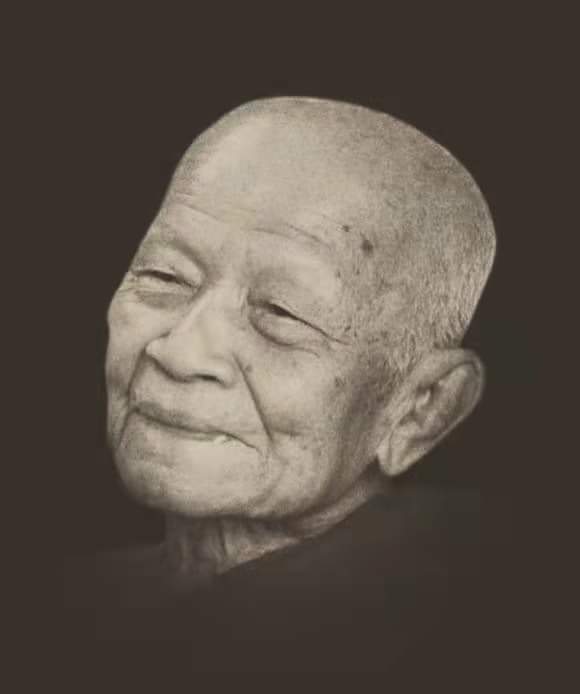
 The teachings of Ajahn Suchart.


“How to practice without a master?” 


Question from France:  “I live in the countryside in France and cannot find any master. How to practice without a master?”

Than Ajahn:  "You don’t need a master to be teaching you all the time. Now you can study the teachings of the masters from Internet. Go look for a book or someone, like Mr. Olivier, who can help you convey your questions to the master. If you have any questions, you can ask me. 

When you practice, you don’t need to know much. Like meditation, all you need is mindfulness. Try to be mindful all the time, from the time you get up to the time you go to sleep. That’s all you have to know. Try to sit for as much as possible. 

If you don’t have mindfulness, when you sit you cannot become still. So, you need to be mindful when you are not sitting. When you are working, try to be mindful with what you’re doing. Don’t let your mind go someplace else. Be with the work that you are doing. If you are taking a shower, just taking a shower with the body. If you are eating, eating with the body. Don’t send your mind somewhere else. This is developing mindfulness, to bring the mind to be here with the body; To be here and now. 

Once you can do this, when you meditate, you can tell your mind to be with your breath. If the mind doesn’t go elsewhere, it will stay with the breath, and the mind will gradually become peaceful and calm. 

Sometimes the mind might become calm quickly, it might happen all of a sudden. Whatever the situation, don’t anticipate. Just keep being mindful of your breath. Eventually, your mind will become still and happy. If you have any questions, you can go to Internet or come here and ask me.”


From “Dhamma in English to layperson from France, Mar 5-8, 2018.”

By Ajahn Suchart Abhijāto

www.phrasuchart.com

Latest Dhamma talks on Youtube: 

https://www.youtube.com/channel/UCi_BnRZmNgECsJGS31F495g


Punna Wong

The realities of life stare at us in our faces.

Whether we chose to live in denial or see reality is up to us.

Truth is truth. It is universal and is unchanged by locality or culture or nation.

Whenever a child is born, he will die one day. That is the truth no matter what we chose to believe in. Or to disbelieve.

Truth is impersonal. It does not favour anyone or forgive or is bent by prayers or offerings. It is inevitable in its outcome and in timeless.

The Buddha insisted that we must see the truths by ourselves and for ourselves. He wants us to rely on the Truths and on OURSELVES.

Whether we believe him or not is immaterial.

Whether we even call ourselves Buddhists or not is also immaterial.

The Buddha would not have become the Buddha if not for him seeing the truths of life.

And he wants us to see the truths for ourselves.

We take refuge in the Truths.

We depend on our own senses and mind to perceive the truth.

We have the confidence in ourselves.

No god that a human being worship or praise will make that human a god.

But one need not worship or praise the Buddha to be enlightened. One only needs to see with open unprejudiced eyes.

Human beings create gods for every need. The chinese have gods of wealth, studies, justice, etc. Man created gods by the thousands, not gods created man.

Believing in the truth and working in harmony with it is wise and logical.

It will be foolish to believe in what is untrue. It will be dangerous to accept what is untrue as truth without question. We must have faith in ourselves and in the truths.

Blind faith in anything external is unrewarding as we will not be any wiser.

So what is obviously true?

Impermanence is one. All things are forever changing. Nothing remains the same for any length of time. If we are attached to the impermanent as a refuge we will be disappointed.

But with impermanence we can effect a change for the better in ourselves because even we are impermanent.

Suffering or dissatisfaction is another. Just look around us. Even the most happy of times will end.

And suffering can arise from our bodies, emotions, attachments, and from nature.

But we can lessen suffering too if we learn to live in harmony with nature.

But the suffering which leads to the end of suffering is worth it.

Nothing wholesome or good can be achieved without effort or stress. But this suffering which leads to a noble outcome is worth the effort.

Pls make sure that your suffering is worth the suffering!

Nonself does not mean that we do not exist but that there is nothing permanent in us. We are always changing in both body and mind.

Aging, sickness and death is not within our control. It is because of Nonself. We do not have any self that is ours to control.

But the positive aspect is that since we are not cast unchangingly in concrete we can change for the better. An uneducated man can take night classes. An ill tempered man can calm himself. If we are unchanging with a permanent self then there is no hope.

Emptiness does NOT mean Nothingness. On the contrary Emptiness is the potential for anything to be anything.

A cup is Empty hence it can be filled with tea.

A gold ring can be melted down. The ring is now Emptied of the ring it used to be but a piece of gold now remains which can be  transformed into other jewellery. 

Look at a table. Is it a table? Yes we call it one but in reality it is a combination of pieces of timber.

So we call it timber then but that too is wrong because that timber is merely parts of what was once a tree!

So we call it parts of a tree then. Again wrong because that tree grew from a seed with sunlight, soil, water etc. The entire universe is in that tree contributing to it.

Hence on the tip of a needle the entire universe exists.

Emptiness is that potential to become. Form is no different from Emptiness. Emptiness no different from form.

From Emptiness arises all forms.

This is profound science. This is reality.

So we must have confidence in ourselves and we can change to be better.

The Buddha does not need us to pray to him or to worship him or to seek his forgiveness. The power to change is with us. He wants us to live a noble life in harmony with the Truths of life, the Dhamma. And he wants us to confirm its truthfulness by ourselves.


#Punnawong


Wednesday, 4 August 2021

Devotee: Is it more efficacious to pray to Taowesuwan or Avalokiteshvara (Guan Yin Bodhisatta)?

Devotee:  Is it more efficacious to pray to Taowesuwan or Avalokiteshvara (Guan Yin Bodhisatta)?


Chao Khun Keng: Haha! That’s a very good question. Probably because we are influenced by the Theravada tradition, my answer will be shaped in that way. What I am about to say does have its roots in the Suttas, specifically the Atanatiya Paritta. Hence, I dare to share with all of you. There are records of these contents within the Suttas, I also have had such experiences.

There was once when I was practicing in an area surrounded by villagers. These native inhabitants were very hostile, and they often verbally abused me. They held parangs and threatened me. My legs were shaking when I witnessed this sight. I am not made of steel and iron. If they wielded the parang against me, my life would be gone. They asked, “Why are you here?” I replied, “I’m working here.” 

That was not a joke at all. Many things happened to me during that period of time. Many people used black magic on me and I was not in Thailand. If I was in Thailand, the Kruba Ajahns would be able to save me. But at that point, that was no Kruba Ajahn to help me! So then, I recollected the Atanatiya Paritta.

It was really miraculous. I received the help of the Devas. When I was meditating, I saw many Devas holding iron rods. They told me, “Ajaan don’t be afraid, we will protect you.” Immediately, faith arose in my mind. I became confident that I could resolve the current problem. Those Devas would immediately lash out at whoever tried to harm me and they got into a rough fight. 

Without the assistance of the Devas, I would not have endured through those hard times.

Hence, that is why we constructed a Taowesuwan statue outside our monastery, holding an iron rod in his hand. Some people ask me, “Ajaan, why do you put such an ugly statue in front of the kuti. 

“Ugly? I am indebted to his assistance. [By erecting this statue], I will remember them when I recite the Suttas.” Because, we need to have gratitude as a person. When we do not have the ability to resolve problems, we need the help of others.

As to Avalokiteshvara, in our perception, Avalokiteshvara has a female appearance, and as monks…. (laughs) Actually, what does Avalokiteshvara or Kuan Shi Yin Pu Sa mean? Kuan Shi Yin (“sound perceiver” or “he who looks down upon sound”) What is the sound that Kuan Yin perceives? It is the sound of samsara, dukkha, anicca, anatta! In India, Avalokiteshvara is depicted as round and plump. India has their own version of Kuan Yin! Hence, in different cultures, different deities are depicted in different manners. 

In Thailand, Taowesuwan is depicted as a Yakkha, very fierce with long teeth and holding an iron rod in his hand. But if u look at our Chinese Mahayana versions, Taoweisuwan is depicted as a very majestic general instead, not fierce at all. In Vajrayana, Taowesuwan is depicted in another manner also.

Hence, there are different depictions in different cultures. All the Dhammas are based on one's mind. All these images are drawn to fit the faith and beliefs of the native communities. Hence, if you ask me whether it is more efficacious to pray to Taowesuwan or Avalokiteshvara. I believe that I have already answered your question."


Tuesday, 3 August 2021

From A Life of Inner Quality by Ajaan Mahā Boowa Ñāṇasampanno. Translated by Ṭhānissaro Bhikkhu

From A Life of Inner Quality by Ajaan Mahā Boowa Ñāṇasampanno. Translated by Ṭhānissaro Bhikkhu


Once, when the Buddha was still alive, his opponents hired some people to curse him and Ven. Ānanda when they were out on their alms round. “You camels. You skinheads. You beggars,”— that’s what they say in the texts. 

Ven. Ānanda got all upset and asked the Buddha to go to another city—a city where they wouldn’t get cursed, a city where they wouldn’t get criticized. The Buddha asked him, “And what should we do, Ānanda, if they curse us there?” 

“Leave that city and go to another.” 

“And if they curse us there, where are you going to go? If you keep running away from wherever they curse you, in the end you won’t have a world left to live in.” 

“This is why it’s not right to run away from your enemies by escaping from one place and going to another. The only right way to escape is to be aware in your heart and escape into your heart. If you’re sharp enough to contend with the enemies in your heart, your outside enemies won’t mean a thing. You can live where you like and go where you like with no trouble at all.” 

That’s what the Buddha said, after which he added—he said it in Pāli, but I’ll give you just the gist—“We’re like elephants going into battle.” (In those days they used elephants in battle, you know, they didn’t wage war the way we do now.) “We’re like elephants going into battle. We don’t pay any heed to the arrows coming at us from all sides. We’re intent only on going into the front lines and crushing the enemy to bits with our own strength and ability. We can’t be shaken by the dangers coming from this place or that.” 

The same sort of thing holds true for us. We’re students of the Buddha. If we run here because there are enemies over there, and then run there because of enemies over here, always on the run in this way from dawn to dusk to the day we die… If we’re like this, then we’re like a mangy dog. It itches here, so it scratches itself and then runs over there, hoping to get away from the itch. Once it gets there, it still itches, so it scratches some more and runs on. It’ll never come to the end of this, because the itch lies in its own skin. 

But if it gets over its mange, it won’t itch and won’t scratch, and can be comfortable wherever it goes. 

As for us, we’ve got the kind of mange that makes us itch and scratch in our own hearts, so we have to cure it right here in our hearts. When people criticize us, what do they say? Take their words to contemplate so that you can get to the facts. Usually, we just react to our first assumptions about their criticisms. What are those assumptions? Suppose they say that Old Grandfather Boowa is a skinhead. 

Am I really a skinhead? I have to take a good look at myself. If I really am a skinhead, I have to admit that they’re right, that what they say is true. Once you take the approach of accepting what’s right, what’s true, then there are no more issues.

This is how you straighten out your life—by straightening out your heart. 

If they say good things about you, how does your mind zip out to react? 

If they say bad things, how does it react? As soon as they’ve said those things, the breath with which they said them is past and gone. They say good things, and that breath is gone. 

They say bad things, and that breath is gone—but the breath of the thoughts that get formed in our mind: that doesn’t go. Our attachments and assumptions will hold it right here and then burn us right here with all the smoldering thoughts we keep stirring up. 

So we end up saying that this person is no good, that person is no good—but as for the way we burn and get ourselves all upset, we don’t give any thought to whether that’s any good or not. 

This is the point we usually don’t straighten out, which is why we go criticizing this and that and get things all worked up. But if you do straighten out this point, then you can live wherever you like. Your outside manner in dealing with people may be heavy or light, as the case may call for, but within yourself you’re not stuck on either yourself, the issues that get sent your way, or the other person, the breath with which that person says things—not stuck on anything at all. Only then can you say that you’re practicing the Dhamma. 

This is how you straighten things out when you straighten out your life. 

If you try to go straightening things out outside—straightening out this person and that, running away from this one and that— where are you going to run to? If you run away from this person, you run into that one. Run away from that person, and you run into this one. If there’s no one left to run away from, you end up running into yourself, because you’re a person too. This is how you have to think when you practice the Dhamma. You have to encompass everything. 

The Buddha didn’t teach people to be stupid, you know—running from this city to that, in the way Ven. Ānanda asked him to go to some other city where they wouldn’t get cursed. The Buddha refused to go. 

“Wherever we go, people have the same sort of mouths, so they can curse you in just the same way.” 

That’s how you have to think if you really want to look after your life.


~•~•~•~•~•~•~


PDF: https://forestdhamma.org/ebooks/english/pdf/A_Life_of_Inner_Quality.pdf


Monday, 2 August 2021

The Art of Letting Go

The Art of Letting Go  


When you sit and meditate, even if you don't gain any intuitive insights, make sure at least that you know this much: When the breath comes in, you know. When it goes out, you know. 

When it's long, you know. When it's short, you know. Whether it's comfortable or uncomfortable, you know. If you can know this much, you're doing fine. As for the various thoughts and concepts that come into the mind, brush them away — whether they're good or bad, whether they deal with the past or the future. Don't let them interfere with what you're doing — and don't go chasing after them to straighten them out. When a thought of this sort comes passing in, simply let it go passing on. Keep your awareness, unperturbed, in the present.

When we say that the mind goes here or there, it's not really the mind that goes. Only concepts go. 

Concepts are like shadows of the mind. If the body is still, how will its shadow move? The movement of the body is what causes the shadow to move, and when the shadow moves, how will you catch hold of it? 

Shadows are hard to catch, hard to shake off, hard to set still. The awareness that forms the present: That's the true mind. The awareness that goes chasing after concepts is just a shadow. Real awareness — "knowing" — stays in place. It doesn't stand, walk, come, or go. As for the mind — the awareness that doesn't act in any way coming or going, forward or back — it's quiet and unperturbed. And when the mind is thus its normal, even, undistracted self — i.e., when it doesn't have any shadows — we can rest peacefully. 

But if the mind is unstable, uncertain, and wavering, concepts arise and go flashing out — and we go chasing after them, hoping to drag them back in. The chasing after them is where we go wrong. This is what we have to correct. Tell yourself: Nothing is wrong with your mind. Just watch out for the shadows.

You can't improve your shadow. Say your shadow is black. You can scrub it with soap till your dying day, and it'll still be black — because there's no substance to it. So it is with your concepts. You can't straighten them out, because they're just images, deceiving you.

The purpose of training the mind to be still is to simplify things. When things are simplified, the mind can settle down and rest. And when the mind has rested, it'll gradually become bright, in and of itself, and give rise to knowledge. But if we let things get complicated — if we let the mind get mixed up with sights, sounds, smells, tastes, tactile sensations, and ideas — that's darkness. Knowledge won't have a chance to arise.

When intuitive knowledge does arise, it can — if you know how to use it — lead to liberating insight. But if you let yourself get carried away by knowledge of the past or future, you won't get beyond the mundane level. 

In other words, if you dabble too much in knowledge of physical things, without gaining wisdom with regard to the workings of the mind, it can leave you spiritually immature.

Whatever appears, good or bad, true or false, don't let yourself feel pleased, don't let yourself get upset. 

Keep the mind balanced and neutral, and discernment will arise. You'll see that the vision or sign displays the truth of stress: it arises (is born), fades (ages), and disappears (dies).

If you get hooked on your intuitions, you're asking for trouble. Knowledge that proves false can hurt you. 

Knowledge that proves true can really hurt you. If what you know is true, and you go telling other people, you're bragging. If it turns out to be false, it can backfire on you. This is why those who truly know say that knowledge is the essence of stress: It can hurt you. 

Knowledge is part of the flood of views and opinions over which we have to cross. If you hang onto knowledge, you've gone wrong. If you know, simply know, and let it go at that. You don't have to be excited or pleased. You don't have to go telling other people.

So whatever you know, simply be aware of it and let it go. Don't let there be the assumption that "I know." 

When you can do this, your mind can attain the transcendent, free from attachment.


~ Ajahn Lee Dhammadharo


The teachings of Ajahn Suchart

The teachings of Ajahn Suchart


Question:  When I have a problem with someone, I’d tell myself, ‘Ok, it’s impermanent. I don’t have any problem with him.’ Is this vipassanā?

Than Ajahn:  Yes, but that way, you can never enter into samādhi, you can only deal with superficial problem.  

When you get into serious problem, you will not be able to deal with it.  

When you lose something you love, you cannot stop your mind from being sad. So, you need to go deeper.  

Your mind has to go deeper in order to be able to dig out the cravings that were embedded in your mind.  

If you liken your craving to a tree, you’re only cutting out the branches, you’re not cutting the tree or uprooting the root of the tree.  You need to have samādhi first, then you can uproot the root of your cravings.  If you never get into samādhi, you will never be able to use vipassanā fully, you’ll just have a superficial vipassanā.  And the problem will keep coming back again and again. If you can uproot the root of your cravings, no craving will come back and create any problems for your mind. 

This is the problem with people when they study too much: they get confused.  They don’t know what they’re doing.  They don’t know where to start, so they just take in everything that comes to them.  The goal of sitting meditation is to calm the mind.  But when they sit in meditation, when the mind is being distracted by something, they will follow it and deal with the distraction, so they’ll never get to the goal of meditation.  The goal of meditation is to completely stop the mind from having mental action.  If they never get to the deepest part of the mind, they will not be able to uproot the cravings which are embedded in the deepest part of their mind. 

This is the problem with people nowadays: they study the whole process and they don’t know where to start, so they just pick the part they like and do that part. When they get some results, they’d think, ‘This is it!’ 

They don’t know that they only get partial result.  They’re just cutting the branches of a tree or cutting the leaves of the tree, and they’d say, ‘I’ve cut the tree.’  Then, in a few days later, the leaves are coming out again, the braches are coming out again, because they don’t get to the root of the tree. 

You have to uproot the root of your cravings.  And to do it, you need to have samādhi—the mind that is fully concentrated, the mind that is one, that merely knows, peaceful and happy.  Once you have this kind of condition developed in your mind, then it has a strong ability to uproot all the cravings including the craving that is really strong, not just the superficial craving about people here and there, but about your self, your life, your body.  Can you get rid of your sadness from getting old, getting sick or dying?  This is much more important to deal with. 

People who go to study in meditation retreat, they are only taught the elementary level and they’d think that they have reached the goal.  Most of the time, they don’t complete each step of the practice; they just do a little bit of each step and they’d think they already have become enlightened.  But, it’s just superficial enlightenment. 

In order to achieve full enlightenment, you have to complete each step 100%.  Like when the Buddha said to you to do dāna (charity), it means you have to give up all your wealth and go become a monk.  Once you become a monk, you can have all the time to concentrate on keeping your morality (precepts) and you will have all the time to develop mindfulness to get your mind into complete samādhi.  

Once you have complete samādhi, then you can root out all your cravings or your attachment to your body, your life: this is something that you need to do it fully in each step of the practice. 

If you just do a little bit of each step, like giving some money to charity, keeping the 5 precepts, having one or two hours of meditation, and contemplating on aniccaṁ, dukkhaṁ, anattā, and think, ‘Oh! I have no attachment anymore,’ this is just in your thought.  You haven’t faced the truth yet.  You haven’t come to lose something you love yet.  When you lose something you love, then you’ll see what happens.  If you’re fully enlightened, you will not be hurt.  

You’d just smile and say, ‘So, what? 

That’s life. Whenever there’s gain, there will be losses.’  So, can you accept losses?  If you still want the gain and don’t want any losses, then you’re still not enlightened.  You must do the opposite: you don’t want any gain and you are not afraid of losing whatever you have, then this is when you become enlightened.


“Dhamma in English, Mar 15, 2019.”

By Ajahn Suchart Abhijāto

www.phrasuchart.com

Latest Dhamma talks on Youtube: 

https://www.youtube.com/channel/UCi_BnRZmNgECsJGS31F495g


Sunday, 1 August 2021

NO SELF SURRENDER By Ven Dr K Sri Dhammananda Thero

NO SELF SURRENDER
By Ven Dr K Sri Dhammananda Thero


Dependence on others means a surrender of one's effort and self-confidence.

Buddhism is a gentle religion where equality, justice and peace reign supreme. To depend on others for salvation is negative, but to depend on oneself is positive. Dependence on others means surrendering one's intelligence and efforts.

1. Everything which has improved and uplifted humanity has been done by man himself.

2. Man's improvement must come from his own knowledge, understanding, effort and experience and not from heaven.

3. Man should not be a slave even to the great forces of nature because even though he is crushed by them he remains superior by virtue of his understanding of them.

Buddhism carries the Truth further: it shows that by means of understanding,

4. man can also control his environment and circumstances. He can cease to be crushed by them and use their power to raise himself to great heights of spirituality and nobility.

Buddhism gives due credit to man's intelligence and effort for his achievements rather than to supernatural beings.

True religion means faith in the good of man rather than faith in unknown forces. In that respect, Buddhism is not merely a religion, but a noble method to gain peace and eternal salvation through living a respectable way of life. From the very outset, Buddhism appeals to the cultured and the intellectual minds.

Every cultured man in the world today respects the Buddha as a rational Teacher. The Buddha taught that what man needs for his happiness is not a religion with a mass of dogmas and theories but knowledge of the cosmic nature and its relationship to the law of cause and effect. 

Until this principle that life is merely an imperfect manifestation of nature is fully understood, no man can be fully emancipated.

The Buddha has given a new explanation of the universe. It is a new vision of eternal happiness, the achievement of perfection. The winning of the human goal in Buddhism is the permanent state beyond impermanency, the attainment of Nibbana beyond all the worlds of change, and the final deliverance form the miseries of existence.